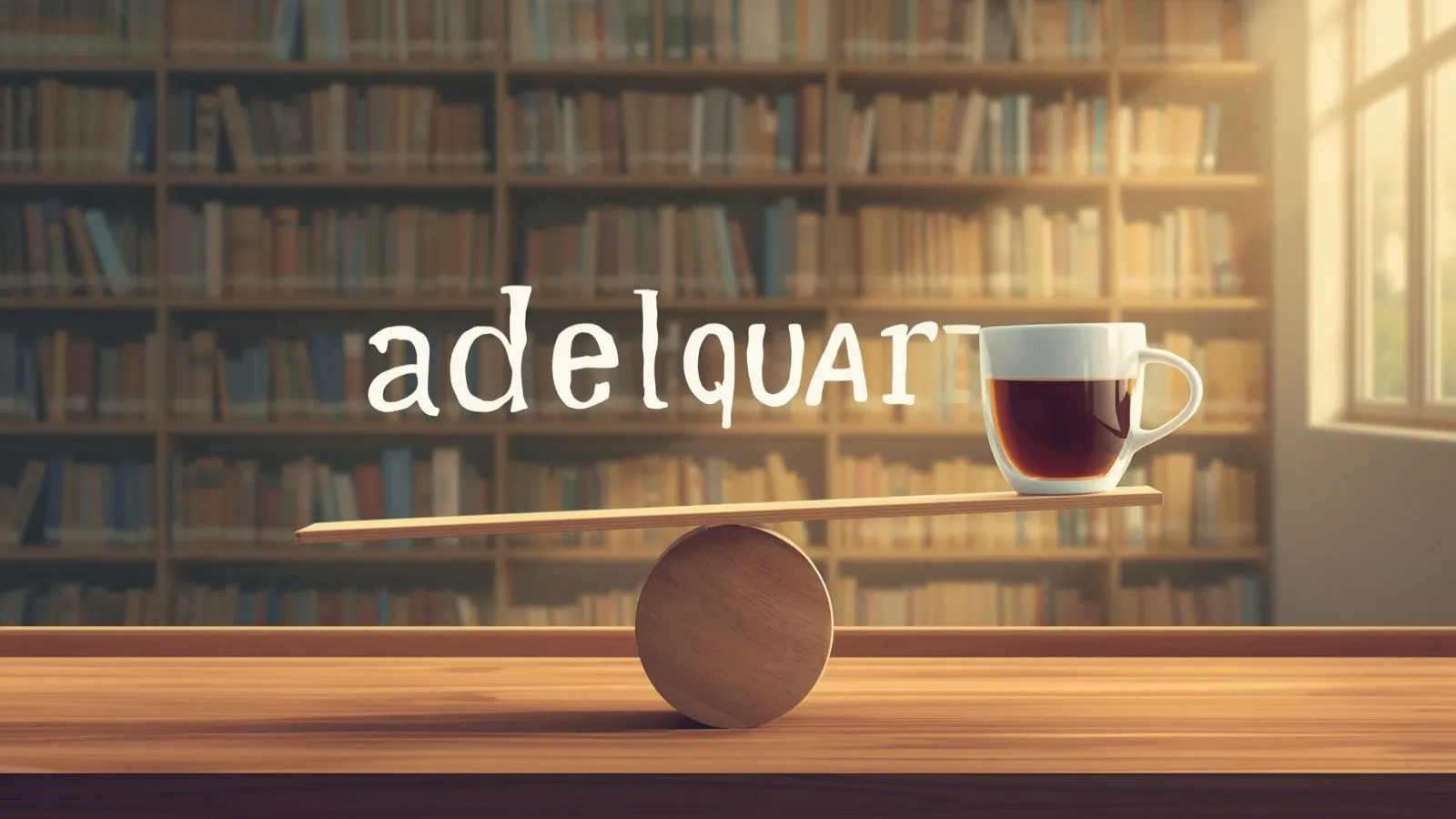
Have you ever heard someone say, That’s good enough? That idea is very close to what the word adequate means.
It is a simple word. But many people are not sure how to use it the right way. Some think it means great. Others think it means just barely okay. The truth is somewhere in the middle.
The word adequate comes up every day. You may hear it at school, at work, or at home. A teacher may say a student’s work is adequate.
A doctor may say a patient is getting adequate care. A boss may say the team has adequate resources. In all these cases, the word means the same basic thing.
This article will help you learn what adequate really means. You will also learn how to use it, where it shows up, and how it is different from other words.
By the end, you will feel sure about using this word in your own life.
Definition and Meaning
The word adequate is an adjective. That means it describes a noun. When something is adequate, it is enough for what is needed. It meets the basic requirement. It is not too little. But it is also not extra or more than needed.
Here is a simple definition: Adequate means satisfactory or acceptable. It is enough to meet a need or purpose.
The word comes from the Latin word adaequatus. That word meant made equal to. So when something is adequate, it is equal to the task. It matches what is needed.
The key idea is that adequate is about meeting a standard, not going above it. If you have adequate food, you have enough to eat. You are not going hungry. But you may not have extra food either. If a plan is adequate, it works. It gets the job done. But it may not be perfect or impressive.
In simple terms, adequate sits right in the middle. It is above not enough. But it is below excellent or great.
Usage and Examples
The word adequate is very easy to use in a sentence. You can place it before a noun or after a linking verb like is or are. Here are some clear, simple examples.
The hotel room was adequate for one night. This means the room was fine. It had what was needed. But it was not fancy.
She had adequate time to finish the test. This means she had enough time. She did not rush. But she did not have extra time either.
The city needs adequate funding for its schools. This means the schools need enough money. Not too little. Enough to work well.
His answer was adequate but not impressive. This is a common way people use the word. It shows that something passed the bar. But it did not stand out.
Common Contexts and Applications
The word adequate shows up in many areas of life. Let us look at some of the most common places you will find it.
In Education
Teachers and schools use the word adequate a lot. A student may receive a grade that is adequate. This means they passed. They met the basic standard. But there is room to do better. Schools also talk about adequate progress. This means a student is moving forward at the right speed.
In Law and Government
Courts and governments use the word too. A person has the right to adequate legal representation. This means they must have a lawyer who can do the job well enough. A city must provide adequate services like clean water and safe roads. Laws often set standards for what counts as adequate in these areas.
In Business and Work
At work, managers talk about adequate resources, adequate staffing, and adequate training. These phrases mean the team has what it needs to do the job. Not more than needed. Just enough to work well.
In Everyday Life
People use the word in simple, daily situations. Is there adequate parking? means Is there enough parking? Do we have adequate supplies for the trip? means Do we have enough of what we need?
Similar Terms or Alternatives
There are many words that are close in meaning to adequate. Knowing these helps you understand the word better and use the right word at the right time.
| Word | Meaning | Compared to Adequate |
| Sufficient | Enough for a purpose | Very similar; often used the same way |
| Enough | As much as needed | More casual and common in speech |
| Satisfactory | Meeting requirements | Slightly more formal; often used in evaluations |
| Acceptable | Good enough to be approved | Focuses on approval rather than quantity |
| Decent | Fairly good | Slightly more positive than adequate |
| Passable | Just barely acceptable | Slightly weaker than adequate |
Sufficient is the closest word to adequate. Many writers use them the same way. She had sufficient time and She had adequate time mean almost the same thing.
Satisfactory is more common in official reports and evaluations. A teacher may write satisfactory on a report card instead of adequate.
Passable is slightly lower than adequate. It hints that something barely got through. The food was passable sounds like it was not great at all.
Decent is a step above adequate. It carries a slightly warmer feeling. The hotel was decent sounds a little better than the hotel was adequate.
Common Misconceptions
Many people misuse or misunderstand the word adequate. Here are some of the most common mistakes.
One big mistake is thinking that adequate means good or great. It does not. If a boss says your work is adequate, they are not complimenting you. They are saying it met the basic need. You may want to do better next time.
Another mistake is thinking adequate is negative. Some people hear it and think it means barely passing or almost not enough. But that is not quite right either. Adequate means the standard was met. It is a neutral, acceptable outcome.
Some people confuse adequate with average. These are not the same. Average refers to the middle of a range of numbers or results. Adequate refers to whether something meets a need. Something can be above average but still not adequate. And something can be below average but still adequate for a simple task.
People also sometimes mix up adequate and appropriate. Appropriate means the right choice for a situation. Adequate means enough in terms of amount or quality. Is this dress appropriate for the wedding? is a different question from Do I have adequate clothing for the trip?
FAQs
What does adequate mean in simple words?
Adequate means enough for what is needed. If something is adequate, it meets the basic standard. It is not too little and not more than needed. It is just enough.
Is adequate a positive or negative word?
Adequate is a neutral word. It is not very positive and not negative. It simply means something is good enough. If you want to sound more positive, you might use words like great, excellent, or impressive instead.
What is the difference between adequate and sufficient?
Both words mean enough. But sufficient often focuses on the amount of something. Adequate focuses on whether something meets a need or standard. In most cases, you can use them the same way. Sufficient water and adequate water both mean there is enough water.
Can adequate mean excellent?
No. Adequate does not mean excellent. Excellent means very high quality or above the standard. Adequate means meeting the standard. These are very different levels.
How do you use adequate in a sentence?
You can say: The team had adequate supplies for the project. Or: Her explanation was adequate. Or: Is there adequate light in this room to read? In all cases, adequate tells you that the amount or quality is enough.
What is the noun form of adequate?
The noun form is adequacy. It means the state of being enough or sufficient. For example: The adequacy of the plan was questioned. The adverb form is adequately, which means in a way that is enough. For example: He was adequately prepared for the exam.
Is adequate the same as average?
No. Average refers to a middle value in a set of data or results. Adequate refers to whether something meets a need. These are different ideas. A below-average result might still be adequate for a simple goal. And an above-average result might not be adequate for a very high standard.
Conclusion
The word adequate is small but powerful. It carries one clear message: something is enough. But it does not go above and beyond either.
You now know that adequate is a neutral adjective. It is not a compliment. But it is not an insult either. It simply means the bar was met. You also know that it is used in education, health, law, business, and everyday life. It shows up in reports, conversations, and formal documents.
You also know the words that are close to it like sufficient, satisfactory, and acceptable. And you know the words that are a step above it, like decent, good, and excellent. Knowing these differences helps you pick the right word every time.

My name is Walt Whitman, and I proudly run Meaniingg.com. I enjoy researching and sharing meanings, biographies, quotes, and useful information that help people expand their knowledge. My goal is to create easy-to-understand content that informs, inspires, and adds value to readers around the world.