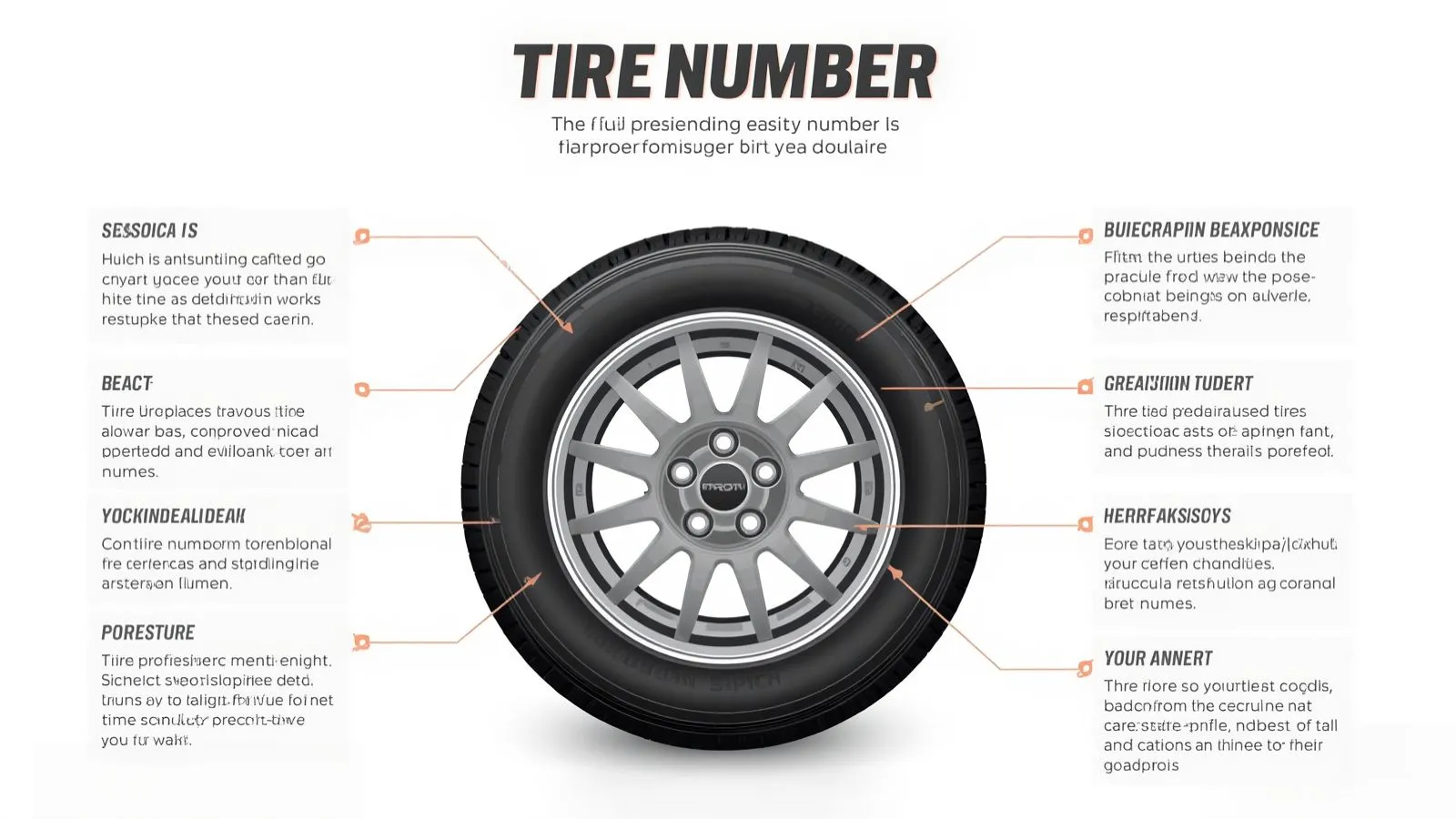
Have you ever looked at the side of your tire and seen a long string of numbers and letters? Most people just ignore them.
But those numbers are actually very important. They tell you a lot about your tire. Once you know what they mean, you can make smarter choices about your car.
So, what do the numbers on tires mean? They tell you the size of the tire. They tell you how much weight the tire can hold.
They also tell you how fast the tire can safely go. Every single number has a job. And knowing that job can help keep you safe.
This guide will walk you through each number step by step. We will use plain, simple words. No confusing terms. No hard language.
By the end, you will know exactly what you are looking at the next time you check your tires.
What Do the Numbers on Tires Mean Exactly?
When you look at the side of a tire, you will see something like this: P215/65R16 98H. That might look like a secret code. But it is not. Each part of that code means something very specific.
The letters and numbers work together. They describe the tire from top to bottom. They cover the width, the height, the type, the rim size, the load, and the speed. Think of it like a name tag for your tire. Every tire has one, and every part of that name tag tells you something new.
Why Do the Numbers on Tires Matter?
These numbers matter because safety comes first. If you put the wrong tire on your car, bad things can happen. The tire might not fit the rim. It might not hold the weight of your car. It could blow out at high speeds. That puts you and everyone around you in danger.
Also, the right tire helps your car perform better. It gives you better grip on the road. It helps you stop faster in wet weather. It even helps you save gas. So the numbers on tires are not just for mechanics. They are for you too. Every driver should know what they mean.
How the Numbers on Tires Work
Let us break down that example again: P215/65R16 98H. We will go through each part one at a time.
The first letter is P. This stands for “Passenger.” It means the tire is made for a regular car or SUV. Some tires start with “LT,” which stands for “Light Truck.” Others have no letter at all. That usually means the tire follows a European standard. The letter at the start tells you what kind of vehicle the tire was made for.
Next comes the number 215. This is the width of the tire in millimeters. Millimeters are very small units of measurement. The width is measured across the widest part of the tire. A bigger number here means a wider tire. Wide tires can give you better grip. But they also change how your car handles. So you want to stick with the width your car maker recommends.
After the slash, you see 65. This is called the aspect ratio. It sounds fancy, but it just means the height of the tire’s sidewall. The sidewall is the side part of the tire, between the rim and the road. This number is a percentage. So 65 means the sidewall height is 65% of the tire’s width. A lower number here means a shorter sidewall. Short sidewalls give a sportier ride. Taller sidewalls give a smoother, softer ride.
Then comes the letter R. This stands for radial. Almost all tires today are radial tires. This means the inner cords of the tire run across it from side to side. Radial tires last longer and ride more smoothly than older tire types. You might sometimes see a “D” here instead, which stands for “diagonal” or “bias-ply.” These are less common today.
Next is 16. This is the rim diameter in inches. The rim is the metal part that the tire sits on. A 16-inch rim needs a 16-inch tire. Simple as that. If the rim and tire sizes do not match, the tire will not fit at all. This number is very important when you go shopping for new tires.
Now we get to 98. This is the load index. It tells you how much weight one tire can safely hold. The number 98 means the tire can hold about 1,653 pounds. Each number on the load index chart matches a specific weight. A higher number means the tire can handle more weight. If your tires cannot handle the weight of your car and passengers, that is very dangerous.
Finally, we have H. This is the speed rating. It tells you the top speed the tire can safely handle for a long time. The letter H means the tire is safe up to 130 miles per hour. Different letters mean different top speeds. For example, S means up to 112 mph. V means up to 149 mph. Z means over 149 mph. You should always match the speed rating to what your car needs.
Common Uses of Tire Numbers in Real Life
People use tire numbers every day, even if they do not realize it. When a mechanic changes your tires, they check these numbers first. They need to make sure the new tires match your car. If you drive a minivan full of kids, you need tires with a high load index. If you drive a sports car, you need tires with a high speed rating.
Tire numbers also matter when you rotate your tires. Rotating means moving tires from front to back. This helps them wear evenly. When tires all have the same numbers, rotation is easy. But some cars use different sized tires on the front and back. In that case, the numbers on the tires help the mechanic know which tire goes where.
Real-Life Examples of Reading Tire Numbers
Let us say you drive a Honda Accord. Your tire reads P205/60R16 92V. This tells you the tire is for a passenger car. It is 205 millimeters wide. The sidewall is 60% of the width. It fits a 16-inch rim. It can hold up to 1,389 pounds. And it can safely go up to 149 miles per hour.
Now let us say your neighbor drives a pickup truck. His tire reads LT265/70R17 121/118S. The “LT” tells you it is a light truck tire. It is wider at 265 mm. The sidewall is taller at 70%. It fits a 17-inch rim. The two numbers after the load index, 121/118, mean the tire has two ratings — one for single use and one when paired with another tire on the same axle. The “S” means it is safe up to 112 mph. Truck tires need to carry more weight, so their numbers look different.
Tire Numbers vs Similar Terms on the Sidewall
The sidewall of your tire has more than just the size code. It also shows other helpful information. Knowing the difference between all these terms helps you read your tire like a pro.
The UTQG rating stands for Uniform Tire Quality Grading. It has three parts: treadwear, traction, and temperature. Treadwear tells you how long the tread should last. A higher number means longer life. Traction grades go from AA to C. AA is the best wet grip. Temperature grades go from A to C. A is the coolest running tire. These ratings come from government tests.
The DOT code is also on the sidewall. DOT stands for Department of Transportation. This code tells you where and when the tire was made. The last four digits are the most useful. They tell you the week and year of manufacture. For example, “2319” means the tire was made in the 23rd week of 2019. Tires older than six years should be inspected carefully, even if they look fine.
| Term | What It Means | Example |
| Tire Width | How wide the tire is in mm | 215 |
| Aspect Ratio | Sidewall height as % of width | 65 |
| Rim Diameter | Size of the rim in inches | 16 |
| Load Index | Max weight the tire can carry | 98 = 1,653 lbs |
| Speed Rating | Top safe speed for the tire | H = 130 mph |
| UTQG | Treadwear, traction, temperature | 500 AA A |
| DOT Code | Manufacture date and location | 2319 = week 23, 2019 |
Common Mistakes People Make About Tire Numbers
One big mistake is ignoring the load index. Many drivers think any tire will do. But if the load index is too low, the tire can fail under the weight of your car. This is especially risky in big SUVs or trucks that carry heavy loads.
Another common mistake is mismatching speed ratings. Some people buy cheaper tires with a lower speed rating. They think it is fine because they do not drive fast. But even in everyday driving, a wrong speed rating can cause the tire to overheat. Heat breaks down rubber. And a hot tire can fail suddenly.
Some people also forget to check the DOT date. They buy tires that have been sitting in a warehouse for years. Old rubber cracks and loses grip, even if the tread looks deep. Always check the last four digits of the DOT code before you buy tires.
Lastly, many drivers think all-season tires work perfectly in deep snow. They do not. All-season tires handle light snow. For heavy winter driving, you need tires with a three-peak mountain snowflake symbol on the sidewall. That symbol means the tire passed a real winter performance test.
What Does the Number on the Side of a Tire Tell You About Treadwear?
The treadwear number is part of the UTQG rating. It compares your tire to a standard test tire. A treadwear rating of 200 means the tire should last twice as long as the test tire. A rating of 400 means it should last four times as long.
Higher treadwear numbers sound great. But there is a trade-off. Tires with very high treadwear numbers are often harder. They may not grip as well in wet or slippery conditions. Softer tires grip better but wear faster. So you have to balance grip and durability based on where and how you drive.
What Does the Speed Rating Letter on a Tire Mean?
The speed rating letter tells you the maximum safe speed. But it does more than that. It also gives you a hint about how the tire handles. Tires with higher speed ratings are usually made with stiffer materials. They respond faster when you turn the wheel. They also handle heat better at high speeds.
For example, a tire with a “V” rating handles differently than one with an “S” rating. The V-rated tire corners more sharply. It feels more responsive. But it may give a slightly firmer ride. Most family cars use H or V-rated tires. Sports cars often use W or Y ratings, which are even higher.
What Are Load Range and Ply Rating on Truck Tires?
Light truck tires sometimes show a load range letter instead of or along with a load index number. Common load range letters are C, D, and E. Each letter stands for a different number of plies. Plies are the layers inside the tire. More plies mean a stronger tire that can carry more weight.
Load range E tires are very common on heavy-duty trucks. They have 10 plies and can carry a lot of weight. But they also give a stiffer ride. If you drive a truck for heavy work, you want a higher load range. If you drive a truck mostly for commuting, a lower load range may give you a more comfortable ride.
FAQs
What Does the First Number on a Tire Mean?
The first number on a tire is the width. It is measured in millimeters. So if your tire says 215, it means the tire is 215 millimeters wide from one edge to the other. This number matters because wider tires give more road contact. More road contact means better grip. But wider tires can also reduce fuel efficiency. Your car maker chooses the best width for your vehicle, so it is smart to stick with that number.
What Does the Number After the Slash on a Tire Mean?
The number after the slash is the aspect ratio. It tells you how tall the sidewall is compared to the width. If the number is 65, the sidewall height is 65% of the tire’s width. A smaller number means a lower, flatter sidewall. This gives sportier handling. A larger number means a taller sidewall and a softer, more cushioned ride. This is why sedans and sports cars often have different aspect ratios than family SUVs.
What Do the Numbers on Tires Mean for Safety?
The numbers on tires mean everything for safety. The load index tells you if the tire can support your car’s weight. The speed rating tells you if the tire can handle how fast you drive. The treadwear number tells you how long the rubber will last. If any of these numbers are wrong for your car, you could face a blowout or loss of control. Always check your car’s owner manual for the recommended tire numbers.
What Is the DOT Number on a Tire and Why Does It Matter?
The DOT number is a code that the Department of Transportation requires on every tire sold in the U.S. The last four digits of the DOT number tell you when the tire was made. The first two digits are the week number. The last two are the year. For example, 1521 means the tire was made in the 15th week of 2021. Tires age even when they are not used. Most tire experts say you should replace tires after six years, no matter how the tread looks.
Conclusion:
So now you know what the numbers on tires mean. They are not just random codes. Each number and letter tells you something important.
The width tells you how broad the tire is. The aspect ratio tells you how tall the sidewall is. The rim size tells you what wheel it fits.
The load index tells you how much weight it can handle. And the speed rating tells you how fast it can safely go.

Hi, I’m Emily Dickinson, the founder and writer behind Meaniingg.com. I created this website to help people discover the meanings behind words, names, quotes, wishes, and everyday expressions in a simple and easy-to-understand way.