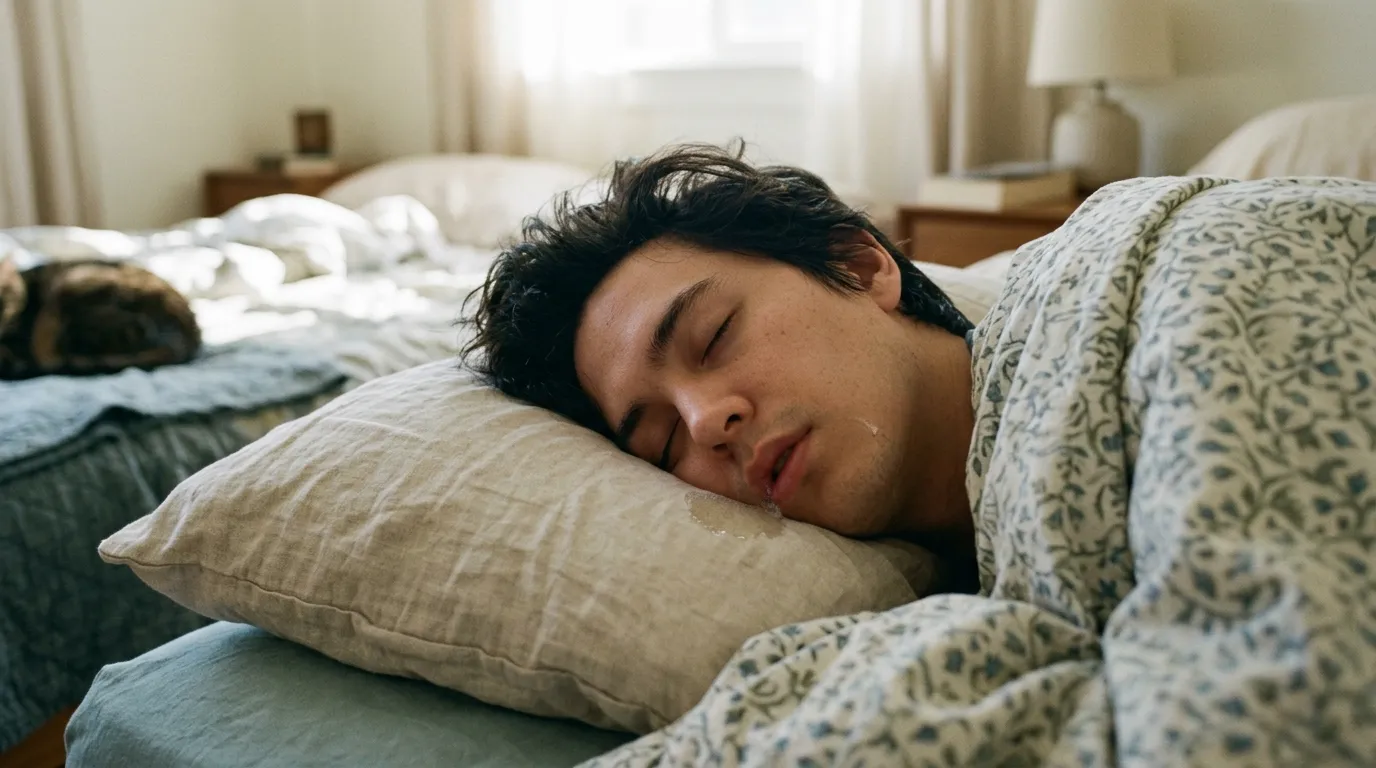
Have you ever woken up with a wet spot on your pillow? You are not alone. Many people drool in their sleep.
It can feel a little embarrassing. But it is very common. Drooling in sleep happens to both kids and adults. It is not always a sign of something bad.
Most of the time, it just means your body is relaxed and doing its job. But sometimes, it can point to a health issue worth looking at.
In this article, we will break down what drooling in sleep really means. We will look at why it happens, what causes it, and when you should talk to a doctor.
We will also bust some myths and answer the most common questions people have.
By the end, you will know a lot more about this very normal, but sometimes misunderstood, thing that happens while you sleep.
Definition and Meaning
Drooling is when saliva flows out of your mouth without you meaning for it to happen. When it occurs during sleep, it is called sleep drooling or nocturnal drooling. The medical term is sialorrhea, which just means too much saliva leaving the mouth.
Your body makes saliva all day and all night. Saliva is made by glands in your mouth. These are called salivary glands. They produce saliva to help you eat, swallow, and keep your mouth clean. When you are awake, you swallow your saliva without even thinking about it. But when you fall asleep, your body relaxes. Your muscles slow down. You stop swallowing as often. This is when saliva can build up and spill out of your mouth.
Drooling in sleep is not the same as having too much saliva. Your glands may be making a normal amount. It is your sleeping position and muscle relaxation that let the saliva leak out. So the meaning is simple. When you drool in sleep, your body has relaxed so much that saliva escapes from your mouth while you are resting.
Why Does Drooling in Sleep Happen
There are many reasons why people drool in their sleep. Some are very simple. Others can be linked to health conditions. Let us go through the most common ones.
Sleeping position is one of the biggest reasons. When you sleep on your side or on your stomach, gravity pulls saliva toward your mouth opening. It then drips out onto your pillow. If you sleep on your back, this is less likely to happen because your mouth stays closed and saliva moves down your throat.
Deep sleep and muscle relaxation also play a big role. When you enter deep sleep, your whole body relaxes. Your jaw may fall open. Your swallowing muscles slow down. This creates the perfect condition for drooling. The deeper you sleep, the more likely drool can happen.
Nasal congestion is another very common cause. When your nose is blocked, you breathe through your mouth. Mouth breathing keeps your lips apart. This makes it much easier for saliva to slip out. People with allergies, colds, or sinus problems often notice more drooling when they are sick.
Certain medications can also cause more drooling. Some drugs, like those used for mood disorders or nerve problems, can raise the amount of saliva your body makes. Others relax your muscles so much that swallowing becomes harder during sleep.
Sleep apnea is a condition where your breathing stops and starts during sleep. People with sleep apnea often breathe through their mouths. This can lead to more drooling. Sleep apnea is a serious condition. If you snore loudly and feel tired all the time, you should see a doctor.
Acid reflux or GERD can also cause drooling. When stomach acid moves up into your throat, your body makes extra saliva to protect itself. This extra saliva can spill out during sleep.
Neurological conditions like Parkinson’s disease, cerebral palsy, or a stroke can affect the muscles used to swallow. When these muscles do not work well, drooling can happen more often, even during the day.
Usage and Examples
Let us look at some everyday examples of drooling in sleep so you can better understand the context.
Imagine a healthy adult who sleeps on their side every night. They often wake up to find a damp patch on their pillow. They have no health problems. Their nose is clear. They sleep deeply. For this person, drooling is just caused by their sleeping position and good, deep sleep. It is totally normal.
Now think about a child who has a cold. Their nose is stuffed up, so they breathe through their mouth all night. They wake up with a wet pillow and a dry mouth. Here, the cause is nasal congestion. Once the cold goes away, the drooling likely stops too.
Consider someone who just started a new medicine. They notice they are drooling more at night. This is a side effect of the drug. They should talk to their doctor about it. The doctor might adjust the dose or switch to a different medicine.
Now think about an older adult who has Parkinson’s disease. They drool during the day and at night. Their swallowing muscles are affected. This is a medical issue. Their doctor will need to help manage it with therapy or treatment.
These examples show that drooling in sleep can mean very different things depending on the person and the situation.
Common Contexts and Applications
Drooling in sleep shows up in several common life situations. Knowing about these can help you figure out what is going on with your own sleep.
During illness, drooling goes up for most people. A stuffy nose forces mouth breathing. More mouth breathing means more drooling. This is one of the most common short-term causes. It usually goes away when you feel better.
During pregnancy, many women notice more saliva. Hormones change the way your glands work. This can lead to more drooling at night. It is a harmless and very common pregnancy symptom.
In babies and toddlers, drooling during sleep is extremely normal. Their swallowing skills are still developing. Their muscles are small and soft. Babies drool a lot, both awake and asleep. This is not a concern at all.
In people with dental issues, misaligned teeth or a bite problem can make it hard to keep the mouth fully closed. This gap lets saliva escape during sleep. Getting dental work done may help reduce drooling in these cases.
In people who use alcohol or sleep aids, heavy relaxation of the throat and jaw muscles can increase nighttime drooling. Alcohol especially relaxes the muscles more than normal. This makes drooling more likely.
Similar Terms or Alternatives
There are a few terms that are related to drooling during sleep. Knowing these can help when you search online or talk to a doctor.
Hypersalivation means your body is making too much saliva. This is different from normal sleep drooling. Hypersalivation is when the glands produce more saliva than your mouth can handle.
Sialorrhea is the medical word for drooling or excessive saliva flow from the mouth. Doctors use this word when writing notes or prescriptions.
Ptyalism is another word used mostly during pregnancy. It means extra saliva in the mouth. It is the same idea as sialorrhea but used in a specific health context.
Nocturnal drooling is the exact term for drooling that happens at night or during sleep. If you want to describe your issue clearly to a doctor, this is a helpful phrase.
These terms all connect back to the same basic idea: saliva leaving the mouth in an unwanted way. Using the right word can help you get better answers when searching for help.
Common Misconceptions
There are some things people believe about drooling in sleep that are just not true. Let us clear them up.
Misconception 1: Drooling means you are unhealthy. This is not true for most people. Drooling is often just a sign that you slept deeply. Deep sleep is actually very good for you. Many perfectly healthy people drool sometimes.
Misconception 2: Only lazy or messy people drool. This has nothing to do with personal habits or cleanliness. Drooling in sleep is a body function. It has nothing to do with how clean or put-together a person is.
Misconception 3: If you drool, something is wrong with your mouth. Not at all. In most cases, the mouth and glands are working perfectly fine. The issue is just muscle relaxation and sleeping position.
Misconception 4: You can train yourself to stop drooling overnight. Drooling is not a habit. You cannot just decide to stop. But you can make changes like switching your sleep position or treating congestion that may reduce it over time.
Misconception 5: Drooling always means sleep apnea. Sleep apnea can cause drooling, but not all drooling means you have sleep apnea. Sleep apnea has other signs too, like very loud snoring, waking up gasping for air, and being very tired during the day.
When Should You See a Doctor
Most of the time, drooling in sleep is harmless. But there are some times when it is smart to talk to a doctor.
You should see a doctor if you drool every single night and it has been going on for a long time. You should also see a doctor if the drooling is paired with loud snoring or if you feel very tired during the day even after sleeping enough hours. These can be signs of sleep apnea.
See a doctor if you have trouble swallowing food or drink, or if you notice drooling during the day too. Daytime drooling along with sleep drooling can be a sign of a nerve or muscle problem that needs to be checked.
If you recently started a new medicine and noticed more drooling, tell your doctor. A simple change in your prescription might solve the problem.
If you have a child who is older than four and still drools heavily during sleep, a pediatrician can help figure out if something needs to be addressed.
Tips to Reduce Drooling in Sleep
If drooling bothers you, there are some simple things you can try.
Change your sleep position. Try sleeping on your back instead of your side or stomach. This lets saliva flow down your throat instead of out of your mouth. It may take a little time to get used to, but many people find it helps.
Treat nasal congestion. If your nose gets blocked at night, use a nasal spray, humidifier, or allergy medicine. Breathing through your nose keeps your mouth closed and reduces drooling.
Stay hydrated. Drinking enough water during the day helps keep your saliva at a normal level. Dehydration can sometimes make saliva thicker, which might feel worse even if there is less of it.
Raise your head. Use a slightly higher pillow or add an extra pillow. A raised head position helps reduce saliva pooling at the front of your mouth.
Get treated for sleep apnea. If you have sleep apnea, a CPAP machine can help you breathe better at night. This usually reduces mouth breathing and drooling too.
Talk to your dentist. If your teeth or jaw are misaligned, your dentist may be able to help. Correcting a bite issue can help your lips close more fully at night.
Frequently Asked Questions
Is drooling in sleep normal for adults?
Yes, it is very normal. Many adults drool in sleep from time to time. It is most common when sleeping on the side or stomach, during deep sleep, or when the nose is congested. It does not mean anything is wrong in most cases.
What does it mean if I drool every night?
Drooling every night usually means you sleep in a position that lets saliva escape, or you breathe through your mouth while sleeping. It can also be linked to allergies, medication side effects, or sleep apnea. If it bothers you or comes with other symptoms, see a doctor.
Can drooling in sleep be a sign of a stroke?
After a stroke, some people lose control of the muscles in their face and throat. This can cause drooling. But drooling on its own, without other symptoms, is not a sign of a stroke. Stroke symptoms include sudden weakness, confusion, trouble speaking, and vision problems.
Does drooling mean I am in deep sleep?
It can. When you enter very deep sleep, your muscles relax fully. Your swallowing slows. Your jaw may open. This can lead to drooling. So in a way, drooling might mean you are sleeping very well.
Can children drool in sleep?
Yes, and it is very common. Young children have developing muscles and smaller airways. They may breathe through their mouths more often. Drooling in kids is normal and usually goes away as they grow older.
Do medications cause drooling at night?
Yes. Some medications increase saliva production or relax muscles so much that swallowing becomes harder during sleep. Common types include certain antipsychotics, some antibiotics, and drugs used to treat neurological conditions. Talk to your doctor if you think a medicine is causing this.
How can I stop drooling in my sleep?
Start by changing your sleep position to sleeping on your back. Keep your nasal passages clear. Use a humidifier. Stay hydrated. If you snore or feel tired during the day, ask your doctor to check for sleep apnea. These steps help most people reduce nighttime drooling.
Conclusion
Drooling in your sleep is something that happens to almost everyone at some point. Most of the time, it is completely harmless. It simply means your body has relaxed and saliva has found its way out of your mouth while you were resting.
Sleeping on your side, breathing through your mouth, being in deep sleep, or having a stuffy nose are all very common reasons this happens.
In some cases, drooling can be tied to health issues like sleep apnea, acid reflux, medication side effects, or neurological conditions. When this is the case, it is worth paying attention and talking to a doctor.
The good news is that most causes of sleep drooling are manageable. Simple changes like switching your sleep position, treating nasal congestion, or adjusting your medications can make a big difference. And remember, waking up with a wet pillow does not mean something is wrong with you. It just means you were sleeping.
If you ever feel unsure about your drooling, especially if it is paired with other symptoms like snoring, fatigue, or trouble swallowing, do not wait. A quick visit to your doctor can give you peace of mind and help you sleep better in every way.

My name is Walt Whitman, and I proudly run Meaniingg.com. I enjoy researching and sharing meanings, biographies, quotes, and useful information that help people expand their knowledge. My goal is to create easy-to-understand content that informs, inspires, and adds value to readers around the world.