Have you ever picked up a carton of milk at the store and seen the word homogenized on the label?
Most people see it every day. But not many people know what it means. If you have ever asked yourself, What does homogenized milk mean? you are in the right place.
This article will explain everything about homogenized milk in simple, easy words.
We will talk about what it is, how it works, why it matters, and what makes it different from other types of milk.
By the end, you will know exactly what you are drinking and why milk is made this way.
Milk is one of the most common drinks in the world. People in the United States drink billions of gallons of milk every year.
Almost all of that milk is homogenized. So it is worth knowing what that word really means.
Definition and Meaning
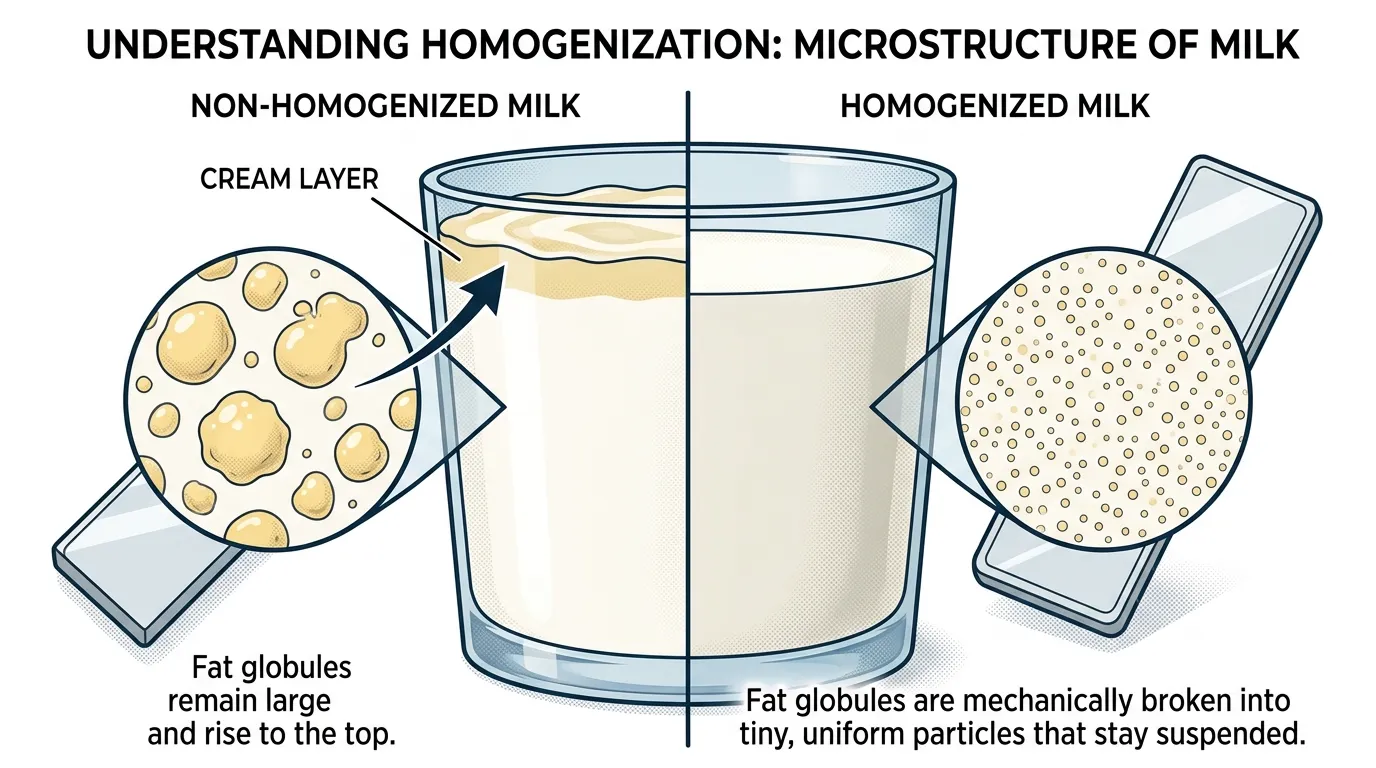
Homogenized milk is milk that has been treated so that the fat in it does not rise to the top. The word homogenized comes from the word homogenous, which means all the same. When milk is homogenized, it becomes the same all the way through. There are no lumps, no layers, and no cream floating on top.
To understand this better, think about what happens when you mix oil and water. If you shake them in a bottle, they mix for a little while. But soon, the oil rises back to the top. The same thing happens with milk. Milk has fat in it. If you leave fresh milk alone, the fat also called cream floats up to the top. This is natural. It is how milk comes out of a cow.
Homogenization is a process that stops this from happening. During this process, milk is pushed through very tiny holes at high pressure. This breaks the fat droplets into much smaller pieces. These tiny pieces spread out evenly through the milk. They are now so small that they stay mixed in. They do not float back to the top.
After this process, every sip of milk you take has the same amount of fat and the same taste from start to finish. That is what homogenized milk means milk that is smooth, even, and the same all the way through.
Usage and Examples
Homogenized milk is used in many ways in everyday life. It is the most common type of milk sold in grocery stores across the United States.
Here are some common ways people use homogenized milk every day:
- Drinking it plain in a glass
- Pouring it on cereal
- Adding it to coffee or tea
- Using it in baking, like in cakes, muffins, or pancakes
- Making sauces, soups, or gravies
- Using it to make cheese, butter, or yogurt at home
Homogenized milk works well in all of these uses because it is smooth and even. There are no chunks of cream. It mixes easily with other things. It also pours the same way every time.
For example, when you make a white sauce for pasta, you want the milk to be smooth. Homogenized milk helps you get a creamy, even sauce every time. If you used non-homogenized milk, the cream might separate and make the sauce uneven.
The same is true for baking. When a recipe calls for milk, it means an even, smooth liquid. Homogenized milk fits that need perfectly. It gives your baked goods a smooth texture and a consistent taste.
Common Contexts and Applications
Homogenized milk is used in more places than just your kitchen. It shows up in many areas of life.
In the food industry, homogenized milk is used to make many products. Ice cream makers use it because the even fat content gives ice cream a smooth, creamy feel. Cheese factories use it to get a consistent product every time. Yogurt companies also use homogenized milk to get a thick, smooth texture.
In coffee shops, homogenized milk is the standard. When a barista makes a latte or cappuccino, they need milk that steams well and mixes smoothly. Homogenized milk does this better than non-homogenized milk. The small, even fat droplets help create the thick, creamy foam that goes on top of your drink.
In schools and hospitals, homogenized milk is the go-to choice. These places serve milk to many people every day. They need milk that is safe, fresh, and the same every time. Homogenized milk fits this need. It also has a longer shelf life than non-homogenized milk, which helps these places reduce waste.
In restaurants and bakeries, chefs prefer homogenized milk because it gives them more control over their recipes. When every batch of milk is the same, every dish comes out the same way. This helps chefs keep the quality of their food high.
Similar Terms or Alternatives
When you learn about homogenized milk, you will also hear other related terms. It helps to know what these mean.
Pasteurized milk is milk that has been heated to kill harmful bacteria. Most milk is both pasteurized and homogenized. These are two different processes. Pasteurization is about safety. Homogenization is about texture and appearance.
Non-homogenized milk is milk that has not gone through the homogenization process. This milk is also called cream-top milk or cream-line milk. When you buy this type, you will see a layer of cream sitting on top. You have to shake the bottle before you pour it. Some people prefer this type because they feel it is more natural.
Whole milk means milk that still has all of its fat. It is usually also homogenized. The fat content is about 3.25%.
Skim milk or fat-free milk has had almost all the fat removed. It is also homogenized. Because there is so little fat, it would not separate even if it were not homogenized but it still goes through the process to meet standards.
Raw milk is milk that has not been pasteurized or homogenized. It comes straight from the cow with no processing at all. Raw milk is not sold in stores in most U.S. states because it can carry harmful bacteria.
Here is a simple table to help compare these types:
| Type of Milk | Homogenized? | Pasteurized? | Fat Content |
| Whole milk | Yes | Yes | 3.25% |
| 2% milk | Yes | Yes | 2% |
| 1% milk | Yes | Yes | 1% |
| Skim milk | Yes | Yes | 0–0.5% |
| Non-homogenized milk | No | Usually Yes | Varies |
| Raw milk | No | No | Varies |
| Almond milk | Usually Yes | Yes | Very low |
Common Misconceptions
There are some things people often get wrong about homogenized milk. Let us clear those up.
Misconception 1: Homogenization adds chemicals to milk.
This is not true. Homogenization is a physical process. That is all. The only thing that changes is the size of the fat droplets.
Misconception 2: Homogenized milk is less natural.
Some people feel this way. But homogenization does not remove anything from the milk. It does not add anything either. It only changes the structure of the fat. The milk still has the same proteins, vitamins, and minerals it had before.
Misconception 3: Non-homogenized milk is healthier.
There is no strong scientific proof for this. Some people choose non-homogenized milk because they prefer the taste or the idea of less processing. That is a personal choice.
Misconception 4: Homogenization changes the taste of milk.
Homogenization has very little effect on taste. Some people say they can taste a small difference between homogenized and non-homogenized milk. But most people cannot tell the difference in a blind taste test. The taste of milk depends more on the fat content and how fresh it is.
Misconception 5: All milk is homogenized.
Not all milk is homogenized. You can buy cream-top milk and raw milk (where it is legal) that are not homogenized.
Misconception 6: Homogenization was always used.
Homogenization is a fairly new invention. It was first used in the early 1900s. Before that, all milk was non-homogenized. People would skim the cream off the top and use it separately for butter or cooking.
Frequently Asked Questions
What does homogenized milk mean in simple terms?
Homogenized milk is milk where the fat has been broken into tiny, even pieces so it does not float to the top. Every sip tastes and looks the same. The milk stays smooth and mixed all the way through.
Is homogenized milk safe to drink?
Yes, homogenized milk is very safe. It has been used for over 100 years. It goes through strict safety checks before it reaches stores. Most doctors and health groups say it is perfectly fine to drink every day.
What is the difference between homogenized and pasteurized milk?
Pasteurization uses heat to kill harmful germs in milk. Homogenization uses pressure to break up fat droplets so they do not separate.
Why is milk homogenized?
Milk is homogenized so that it looks nice, tastes the same every time, and stays smooth. Without homogenization, the cream would float to the top. This would mean some parts of the milk would be very rich and fatty, while other parts would be watery and thin.
Does homogenized milk have more fat?
No. Homogenization does not change how much fat is in the milk. It only changes the size of the fat droplets.
Can I make homogenized milk at home?
Not in the same way factories do it. Factories use high-pressure machines that push milk through tiny openings. You cannot do this at home. You can blend milk to mix the cream in a little, but it will not stay mixed for very long.
Is homogenized milk good for kids?
Yes, homogenized milk is a great choice for kids. It gives them important nutrients like calcium, vitamin D, and protein. Ask your doctor about how much milk is right for your child’s age.
Conclusion
Now you know exactly what homogenized milk means. It is milk that has been treated to break fat into tiny pieces so it stays smooth and even.
Homogenization is one of the most common food processes in the world. It is also one of the most misunderstood. Many people think it makes milk less natural or less healthy. But the science does not back that up. Homogenized milk is safe, nutritious, and very easy to use in everyday cooking and drinking.
The process of homogenization is simple but important. It takes fresh milk and makes it better for everyday use. It helps food makers, chefs, and home cooks all get the same great results every time. That is the real power of homogenized milk it is reliable, safe, and always the same.

My name is Maya Angelou, and I am the creator of Meaningg.com. I am passionate about sharing knowledge, meanings, and useful information with readers around the world. Through Meaningg.com, I aim to make learning simple, engaging, and accessible for everyone. I enjoy researching, writing, and helping people discover the meaning behind words and ideas.