Have you ever heard a sound in your ears that no one else could hear? Maybe it was a buzz, a hiss, or a high-pitched ring.
It came out of nowhere. And it would not go away. If this sounds like you, you are not alone. Millions of people deal with this every single day.
This sound in the ears has a name. It is called tinnitus. The word comes from a Latin word that means to ring. But tinnitus is not just ringing. It can sound like many things. And it can mean many things too.
In this article, we will talk about what ringing in the ears means. We will look at why it happens.
By the end, you will know a lot more about this odd and often annoying sound.
Definition and Meaning
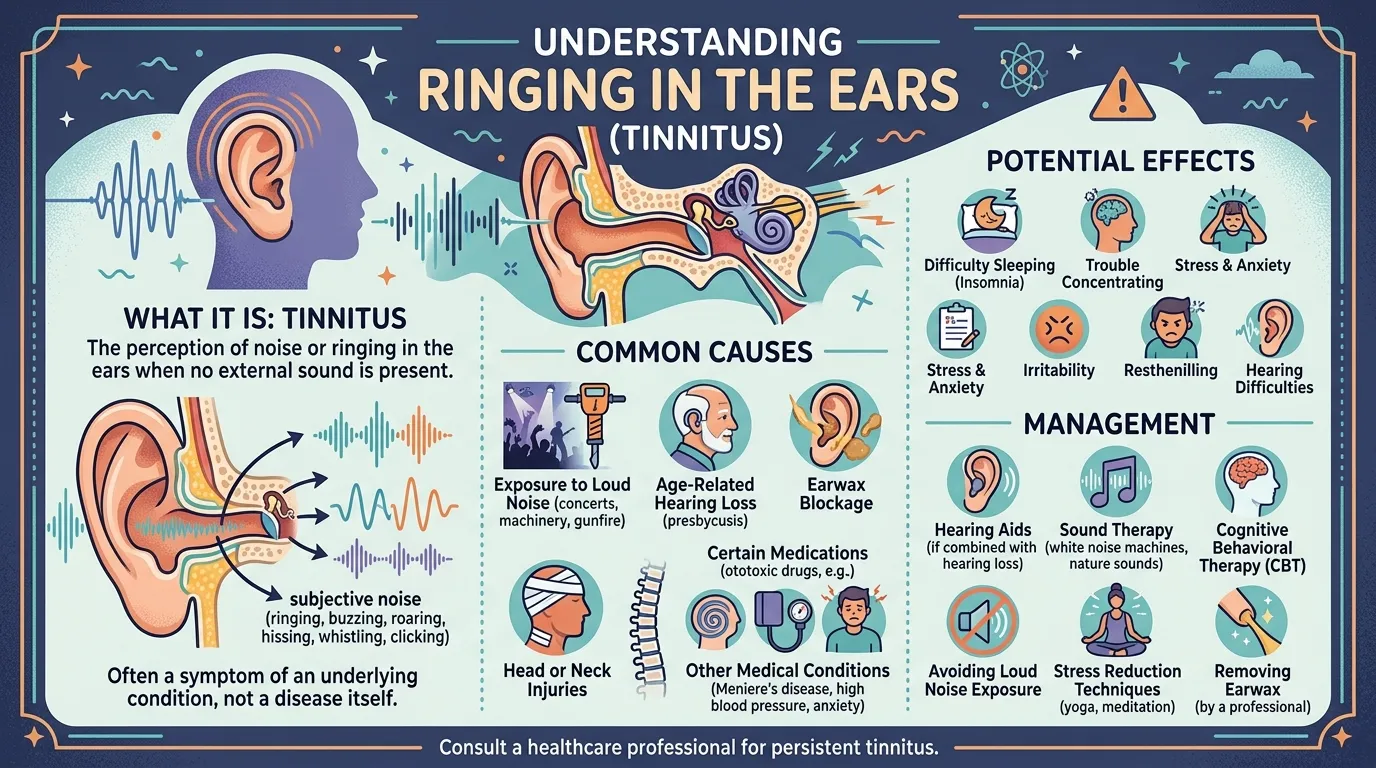
Ringing in the ears is the feeling of hearing a sound when there is no outside noise causing it. Doctors call this tinnitus. The sound is only in your head. No one around you can hear it.
The sound can take many forms. Some people hear a high ring. Others hear a low hum. Some hear a roar or a hiss. Some even hear what sounds like clicking or music. The sound can be soft or loud. It can come and go. Or it can stay all the time.
Tinnitus is not a disease on its own. It is a sign that something else is going on in your body. Think of it like a warning light on a car. The light is not the problem itself. It is telling you that something needs attention.
There are two main types of tinnitus. The first is subjective tinnitus. This is the most common type. Only you can hear the sound. The second is objective tinnitus. This is rare. A doctor can actually hear this type with a special tool. It is usually caused by a blood vessel problem or a muscle issue near the ear.
Usage and Examples
People use the term ringing in the ears in everyday life. But the real word for it is tinnitus. Here are some examples of how people talk about it.
I went to a loud concert last night. Now I have ringing in my ears. This is a very common use. Loud noise is one of the top causes of tinnitus.
My grandpa has had ringing in his ears for years. His doctor says it is from years of working near loud machines. This shows how long-term noise can cause lasting tinnitus.
After I started taking a new pill, I noticed a buzzing in my ears. I told my doctor and she changed the medicine. This is an example of tinnitus caused by drugs.
I was so stressed at work this week. And my ear ringing got worse. Stress is a known trigger for tinnitus to get louder or more noticeable.
As you can see, the ringing in the ears can come from many places. And people notice it in many different ways in daily life.
Common Contexts and Applications
Ringing in the ears shows up in many areas of life. It is not just a medical topic. It touches work, music, aging, and even mental health.
Noise and Loud Sounds
One of the most common reasons for ear ringing is loud noise. This includes concerts, clubs, power tools, guns, and heavy machines. When you hear a very loud sound, it can damage tiny hair cells inside your ear. These cells help you hear. When they get hurt, they may send the wrong signals to your brain. Your brain then hears a sound that is not really there. This is why many factory workers and musicians deal with tinnitus.
Age and Hearing Loss
As people get older, their hearing changes. The tiny cells in the ear can break down over time. This is called age-related hearing loss or presbycusis. When hearing loss happens, tinnitus often follows. This is very common in people over 60. Many older adults say they have some form of ringing or buzzing in their ears.
Medicines and Drugs
Some drugs can cause or make tinnitus worse. Doctors call these ototoxic drugs. This means they are toxic to the ear. Common ones include aspirin (in high doses), some types of antibiotics, cancer drugs, and water pills called diuretics. If a medicine is causing your ear ringing, your doctor may be able to switch you to something safer.
Ear Problems
Earwax buildup can block the ear canal. This can change the way sound moves through the ear. It can cause ringing. Ear infections can also cause it. So can a hole in the eardrum. A problem with the bones in the middle ear is another cause. These issues are often fixable once the doctor finds the problem.
Blood and Circulation Issues
Sometimes tinnitus is linked to blood flow. If the blood vessels near the ear are not working right, you may hear a sound that pulses with your heartbeat. This is called pulsatile tinnitus. High blood pressure, narrow arteries, and some tumors can cause this type. This kind needs a doctor’s attention right away.
Mental Health and Stress
Many people do not know that stress, anxiety, and depression can make tinnitus worse. When you are stressed, your body reacts. This can make the brain more sensitive to sounds. It can also make the ringing seem louder. Some people even say their tinnitus started during a very hard time in their life. This link between the mind and the ear is real and important.
Head and Neck Issues
Jaw problems, head injuries, and neck tension can all cause ear ringing. The jaw joint, called the TMJ (temporomandibular joint), sits very close to the ear. If this joint is not working right, it can send odd signals that feel like ear ringing.
Similar Terms or Alternatives
There are many ways people talk about ringing in the ears. Knowing these terms can help when you talk to a doctor or search for more info.
Tinnitus is the medical word. It covers all types of ear noise, not just ringing.
Buzzing in the ears is another way people say it. The sound feels like a bee or an electric wire.
Hissing in the ears sounds like steam or a snake. Some people describe their tinnitus this way.
Roaring in the ears sounds like wind or water. This is common with a condition called Meniere’s disease.
Ear noise is a simple, general term. People use it when they are not sure what type of sound they hear.
Phantom sound is used in medical writing. It means a sound that the brain makes up, with no outside source.
All of these terms point to the same basic experience. You hear a sound. No one else can. And it affects your daily life.
Common Misconceptions
There are many wrong ideas about ringing in the ears. Let us clear some of them up.
Misconception 1: Tinnitus means you are going deaf.
This is not always true. Many people with tinnitus have normal or near-normal hearing. Tinnitus and hearing loss can happen together, but one does not always lead to the other.
Misconception 2: Tinnitus will always go away on its own.
Sometimes it does. After a loud concert, the ringing may stop in a day or two. But for many people, it stays. And if it is caused by hearing damage, it may be permanent.
Misconception 3: There is nothing you can do about tinnitus.
This is also not true. While there is no cure for all types of tinnitus, there are many treatments that help. Sound therapy, hearing aids, counseling, and lifestyle changes can all reduce how much tinnitus affects your life.
Misconception 4: Only old people get tinnitus.
Tinnitus can affect people of any age. Young people who listen to loud music or go to clubs can get it too. Even children can have tinnitus. Age is a risk factor, but it is not the only one.
Misconception 5: Tinnitus is all in your head, meaning it is not real.
This is a harmful myth. Tinnitus is a real experience. The brain is actually generating a real signal. The sound feels real because, in a way, it is. People with tinnitus are not making it up. It can cause real pain, sleep problems, and emotional distress.
Frequently Asked Questions
Q1: Is ringing in the ears dangerous?
Most of the time, tinnitus is not dangerous. It can be very annoying and affect your quality of life. But it is usually not a sign of something life-threatening.
Q2: When should I see a doctor about ear ringing?
You should see a doctor if the ringing lasts more than a week. Go sooner if you also have hearing loss, dizziness, or pain. See a doctor right away if the sound only comes from one ear. Also get checked if the ringing pulses with your heartbeat.
Q3: Can stress cause ringing in the ears?
Yes, it can. Stress does not directly damage the ear. But it can make tinnitus louder or more noticeable. High stress levels change how the brain handles sound signals. Many people notice their tinnitus gets worse during stressful periods.
Q4: Can ringing in the ears be cured?
There is no single cure for all types of tinnitus. But many people find ways to manage it very well. Treatments include sound masking, therapy, hearing aids, and medication for linked conditions. Some people find that their tinnitus fades over time.
Q5: What foods or habits make tinnitus worse?
Some things are known to trigger or worsen tinnitus. These include too much caffeine, alcohol, salt, and nicotine. Lack of sleep can also make it worse. So can loud sounds without ear protection.
Conclusion
Ringing in the ears, or tinnitus, is one of the most common health issues in the world. It affects people of all ages. It has many causes. And it can change how you live, work, sleep, and feel.
The good news is that tinnitus is not always permanent. And even when it is, there are many ways to make it less of a problem. The first step is to understand what is causing it. The next step is to get the right help.
If you have been hearing a sound in your ears that will not go away, do not ignore it. Talk to your doctor. Get your hearing checked. Make small changes in your daily habits. Protect your ears from loud noise. And know that you are not alone.
Millions of people live well with tinnitus. With the right care and the right mindset, you can too. The sound may be there. But it does not have to run your life.

My name is Maya Angelou, and I am the creator of Meaningg.com. I am passionate about sharing knowledge, meanings, and useful information with readers around the world. Through Meaningg.com, I aim to make learning simple, engaging, and accessible for everyone. I enjoy researching, writing, and helping people discover the meaning behind words and ideas.