Have you ever heard someone say a fighter is the best pound for pound in the world? Or maybe you saw the phrase used to talk about food value or product quality?
This term shows up in many places. But what does it really mean?
The phrase pound for pound is one of those sayings that sounds simple but has a lot of power behind it. It lets people compare things in a fair way. It levels the playing field.
In this article, we will break down exactly what pound for pound means. We will look at how it is used in boxing, sports, food, shopping, and more.
We will also clear up some common mix-ups people have about this term. By the end, you will know exactly how to use it and what it means in any situation.
Definition and Meaning
The term pound for pound means comparing things or people on equal terms, without the advantage of size or weight. It is a way of asking: if everything else were equal, who would come out on top?
The word pound here refers to a unit of weight. One pound equals about 0.45 kilograms. When we say pound for pound, we are saying: for every pound of weight, how much value, strength, or skill do we get?
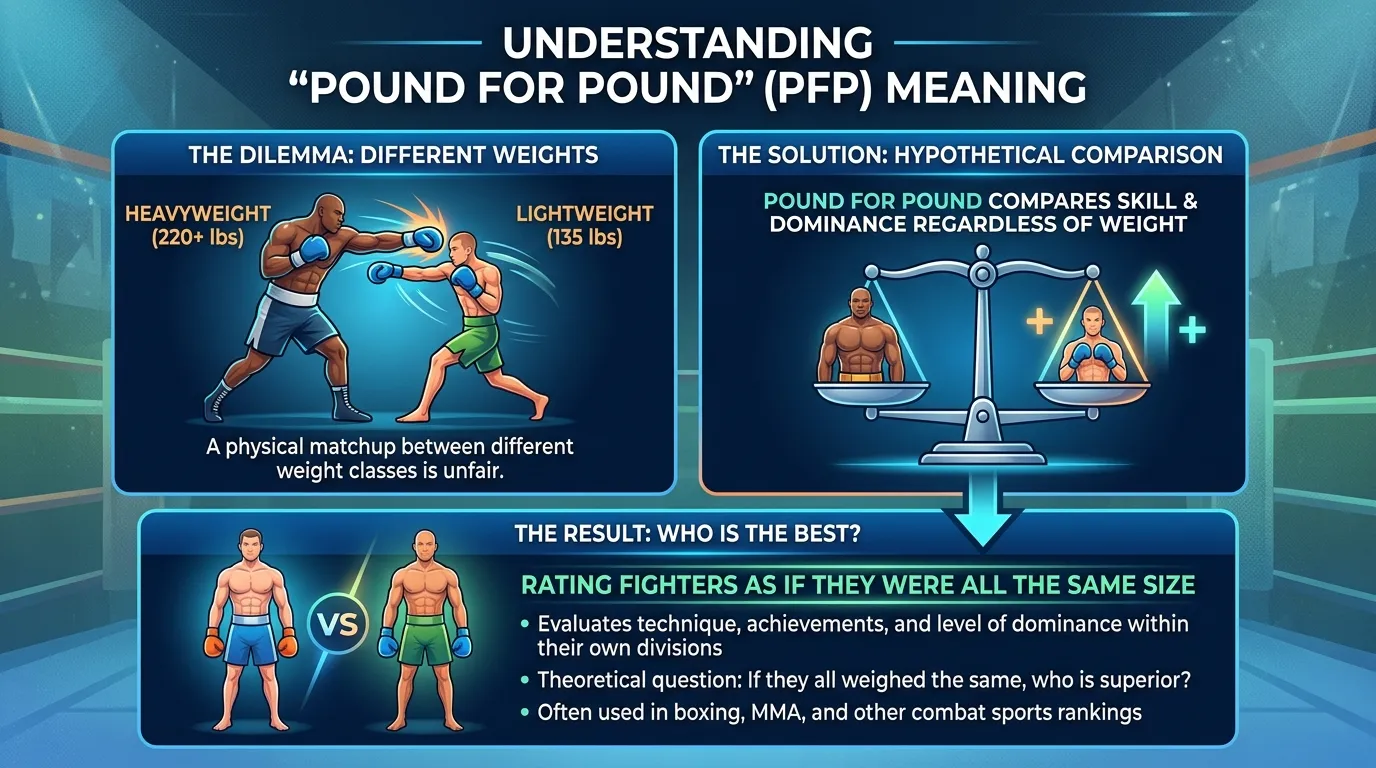
Think of it this way. A big fighter might beat a small fighter just because of size. But if we ask who is the better fighter pound for pound, we are ignoring size and asking who has the most skill, power, and ability for their body weight.
This idea also applies outside of sports. When you shop for food, pound for pound can mean which product gives you more for the same weight. For example, if one bag of rice feeds more people per pound than another bag, it is better pound for pound.
At its core, the phrase is about fair comparison. It strips away the unfair advantages and looks only at true quality or performance.
Usage and Examples
The phrase pound for pound is used in many ways in everyday English. Let us look at some clear, simple examples.
In boxing, a sports reporter might say, She is the best pound for pound fighter in the world. This means that even though she may not be the biggest or heaviest fighter, she has more skill, heart, and ability than anyone else when you compare based on weight class.
In grocery shopping, someone might say, Buying the larger bag of oats is better pound for pound than the small bag. This means you get more value for the same weight when you buy the bigger size.
In talking about strength, a person might say, That little guy is the strongest man pound for pound in the gym. He may not lift the most total weight, but when you compare how much he lifts to how much he weighs, he beats everyone else.
You can also use it in everyday talk. That small car is amazing pound for pound. It runs fast, gets great gas mileage, and costs less to fix. Here, it means the car delivers great results for its size and price.
The term is very flexible. Any time you want to compare two things on equal terms removing the size or weight advantage you can use pound for pound.
Common Contexts and Applications
The phrase shows up in many areas of life. Here are the most common places you will see or hear it.
Boxing and Combat Sports
This is where most people first hear the term. In boxing, fighters are split into weight classes. A heavyweight fighter cannot fight a featherweight fighter because the size difference would be unfair. But fans and experts still want to know: who is the best fighter of all time, across all weight classes?
That is where pound for pound rankings come in. Groups like the WBC, ESPN, and The Ring magazine publish pound for pound lists every year. These lists rank the best fighters based on skill alone, not size. A fighter at 130 pounds can rank above a fighter at 200 pounds if their skill level is higher.
Legends like Sugar Ray Robinson, Muhammad Ali, Floyd Mayweather Jr., and Manny Pacquiao have all been called the best pound for pound fighters in history. Today, names like Canelo Álvarez and Naoya Inoue often top these lists.
Other Sports
The term is not only used in boxing. In mixed martial arts (MMA), the same idea applies. Fans debate who is the best pound for pound fighter in the UFC. Wrestlers, gymnasts, and weightlifters are also compared this way. A gymnast who weighs 100 pounds may show more raw body strength pound for pound than a 250-pound football player.
In the NFL, a small but fast running back might be called the best pound for pound player on the team. A small point guard in basketball might be praised for his pound for pound toughness against bigger players.
Food and Grocery Shopping
This is one of the most practical uses of the term. When you shop, you often see prices listed per pound. Comparing the cost per pound of two products helps you decide which one is a better deal. If chicken breast costs $3.99 per pound at one store and $4.49 per pound at another store, the first store is better pound for pound.
It also applies to nutrition. Some foods pack more protein, vitamins, or calories per pound than others. Eggs, for example, are often praised as one of the best sources of protein pound for pound because they are cheap, packed with nutrients, and easy to cook.
Products and Value
People use the phrase to talk about product value. A small, affordable car might be called the best pound for pound value in its class. A budget laptop might offer the best performance pound for pound compared to more expensive models. A small blender might be praised for being the best pound for pound kitchen tool because it does so much for its size and price.
The phrase helps buyers think smart. It pushes them to look past size and price tags and ask: what am I actually getting for what I am paying or dealing with?
Similar Terms or Alternatives
If you want to say the same thing as pound for pound in a different way, there are a few options.
Ounce for ounce is used in the same way but with a smaller unit of weight. You might say, This hot sauce packs more flavor ounce for ounce than any other brand.
Size for size is another way to make fair comparisons. That small SUV handles better size for size than any truck on the road.
Dollar for dollar is used when comparing value for money. This store brand cereal is better dollar for dollar than the name brand.
Gram for gram appears in nutrition talks. Almonds offer more protein gram for gram than most other snack foods.
All of these phrases follow the same idea. They all say: when you compare equal amounts, which one wins?
Common Misconceptions
There are a few things people get wrong about the phrase pound for pound. Let us clear those up.
Some people think pound for pound means the best overall, with no limits. That is not quite right. It means the best when you factor out the size or weight advantage. A heavyweight boxer may hit harder in total than a lightweight boxer, but the lightweight might be the better fighter pound for pound. The phrase is always about fair comparison, not raw totals.
Some people also think the term only applies to boxing or fighting sports. But as we have seen, it is used for food, products, athletes, and more. Any time you want to compare things on an even playing field by weight, you can use it.
Another mix-up is thinking that pound for pound always refers to actual pounds of weight. In some cases, like sports rankings, the pounds are more of a figure of speech. The idea is still the same you are removing unfair advantages and comparing based on true quality or performance.
Finally, some people think that a pound for pound winner is always the smaller person or thing. That is not always true. Sometimes the bigger option wins even in a fair comparison. The point is not to reward small size but to remove the impact of size from the comparison.
FAQs
What does pound for pound mean in boxing?
In boxing, pound for pound means ranking fighters based on skill alone, not size. It answers the question: if all fighters were the same size, who would win? The best pound for pound boxer is the most skilled, not the heaviest or the biggest.
Can pound for pound be used outside of sports?
Yes, absolutely. The phrase is used in food shopping, product reviews, fitness, and everyday talk. Any time you want to compare two things fairly by their weight or size, you can use pound for pound.
Who is the greatest pound for pound boxer of all time?
This is a big debate among boxing fans. Many experts point to Sugar Ray Robinson as the greatest pound for pound boxer ever. Others name Muhammad Ali, Floyd Mayweather Jr., or Manny Pacquiao. There is no single right answer, but Sugar Ray Robinson is the most common choice among historians and experts.
Does pound for pound mean the best in the world?
Not always. It means the best when you compare on equal terms. A person can be the best pound for pound in a gym, in a city, in a sport, or in the world. The phrase sets up a fair comparison but does not always mean number one on a global scale.
How is pound for pound used in food shopping?
In food shopping, pound for pound helps you compare prices and value. If one product gives you more food, nutrition, or flavor per pound than another, it is the better deal pound for pound. It helps shoppers make smart choices and get more for their money.
Is there a difference between pound for pound and value for money?
They are related but not the same. Value for money looks at what you get per dollar. Pound for pound looks at what you get per unit of weight. Sometimes they go together, but not always. A cheap product might be great value for money but not as strong pound for pound as a heavier, pricier option.
Why do people use the phrase pound for pound instead of just saying the best?
Because saying the best can be misleading. A bigger person or bigger product has natural advantages. Pound for pound takes those advantages away and looks at true quality. It gives a fairer, more honest answer to who or what is really the top performer.
Conclusion
The phrase pound for pound is simple but very powerful. It helps people make fair, honest comparisons. Whether you are talking about the best boxer in the world, the cheapest bag of rice at the store, or the strongest person at the gym, pound for pound gives you a way to look past size and find the real winner.
Now that you know what pound for pound means, you can use it with confidence in conversation, writing, and everyday life. The next time someone calls a fighter the best pound for pound, you will know exactly what that means. And the next time you are at the grocery store comparing two bags of food, you can think like a pro and figure out which one is the better deal pound for pound.

My name is Maya Angelou, and I am the creator of Meaningg.com. I am passionate about sharing knowledge, meanings, and useful information with readers around the world. Through Meaningg.com, I aim to make learning simple, engaging, and accessible for everyone. I enjoy researching, writing, and helping people discover the meaning behind words and ideas.