Have you ever heard someone say something false about another person? Maybe it was a lie told at school, at work, or in a neighborhood.
When false words hurt someone’s name, that can be slander.
Many people use the word slander in daily life. But most people do not fully know what it means in a legal sense.
This article will help you understand slander in a simple and clear way. You will learn what slander is, how it is used, and why it matters.
By the end, you will know exactly what slander means and how it is different from other terms.
Definition and Meaning
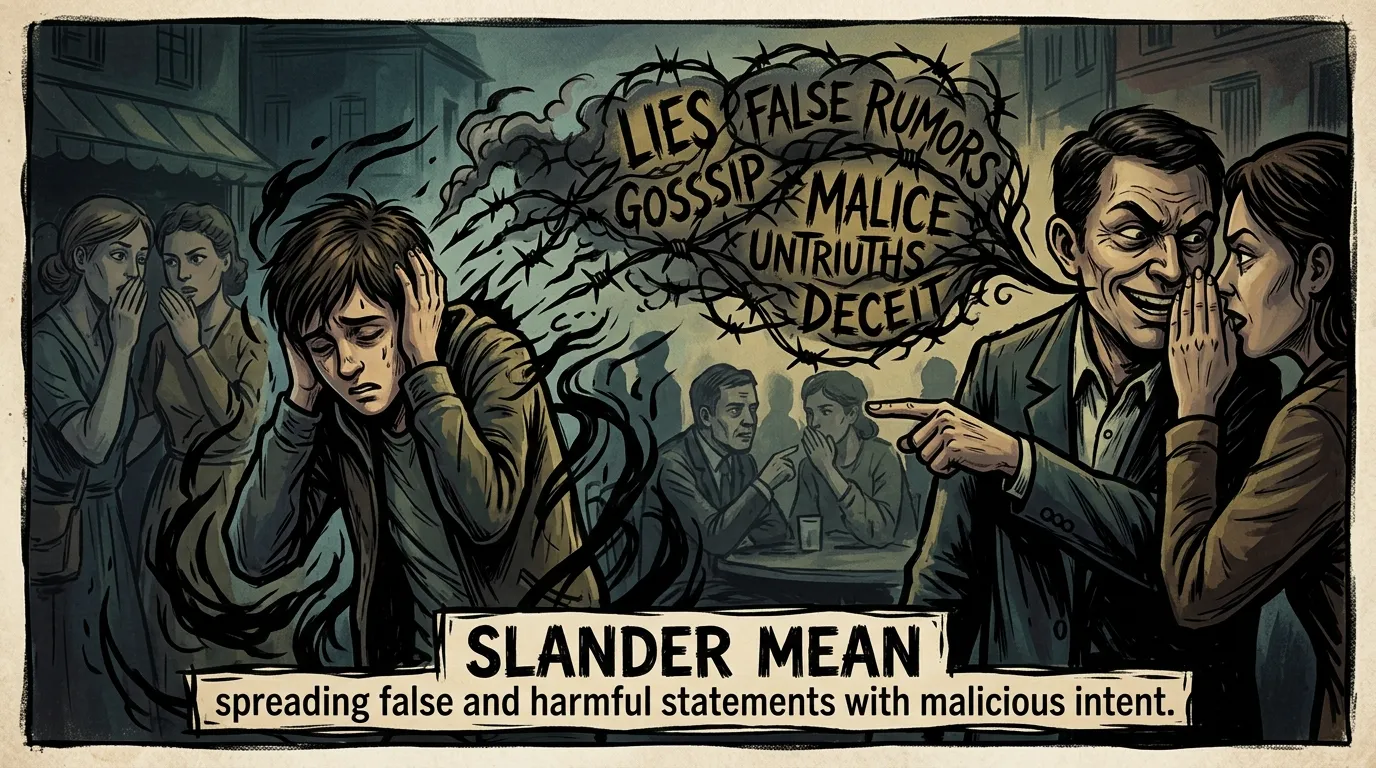
Slander is a spoken false statement that hurts another person’s reputation. The key word here is spoken. Slander is said out loud. It is not written down. When someone says something false about you and that lie damages your name that is slander.
Slander is a type of defamation. Defamation is the big word that covers all false statements that hurt a person’s image. Defamation has two types. The first type is slander, which is spoken. The second type is libel, which is written. So slander is always in spoken form like in a speech, a phone call, a video, or a conversation.
For a statement to count as slander, four things must be true. First, the statement must be false. A true statement is not slander, even if it hurts someone. Second, the statement must be spoken to at least one other person. If you only say it to yourself, it is not slander. Third, the false statement must harm the person’s reputation. It has to damage how others see them. Fourth, the person saying it must have said it with some level of fault or carelessness. They knew it was false or did not check if it was true.
Here is a simple way to think about it. If someone tells your boss that you stole money and it is not true that is slander.
Usage and Examples
Slander can happen in many places. It can happen at work, in school, in a community, or even on a phone call. People use the word slander when they talk about false spoken words that hurt someone.
Here is a simple example. Imagine your neighbor tells everyone in the area that you are a drug user. You are not. That is a lie. Because your neighbor said it out loud to others, and it harmed your name, this could be slander.
Another example. Think about a coworker who tells your manager that you have been selling company secrets. That is false. You did not do that. This kind of lie could cost you your job. If said out loud, this is slander.
In everyday speech, people often say things like That is slander! when someone says something mean or false about them. But in a legal sense, not every false or mean thing someone says counts as slander. It has to meet all four rules we talked about. The statement must be false, spoken to others, harmful to your name, and made with some fault.
Slander can also happen on video calls or in recorded conversations. If someone says a false thing about you in a Zoom meeting, for example, that could be slander. Courts look at how the false statement was made to decide.
Common Contexts and Applications
Slander shows up in many areas of life. It is not just a legal word. People use it in everyday talk, in court cases, in politics, and in media.
In workplaces, slander can be very harmful. If a coworker or boss says false things about you to others at work, it can hurt your career. You may lose your job, miss a promotion, or lose the trust of your team. In these cases, you may have the right to take legal action.
In schools, slander can happen among students. If one student spreads a false spoken lie about another student, it can hurt that student’s social life and mental health. Schools take this seriously, especially when it leads to bullying.
In politics, slander is a big topic. When candidates run for office, they sometimes say false things about each other. If a politician says a false spoken statement to harm another candidate, it can be slander. However, public figures like politicians have a harder time winning slander cases. They must prove that the false statement was made with actual malice. This means the person knew it was false and said it anyway.
In media and entertainment, slander is discussed a lot. Celebrities often deal with false rumors. If someone says something false about a celebrity in a public talk or interview, that could be slander. But again, public figures must meet a higher legal bar to win such cases.
In personal relationships, slander can break families and friendships. If an ex-partner tells mutual friends false things about you, it can ruin those relationships. This type of spoken lie can cause real emotional and social harm.
Similar Terms or Alternatives
There are a few terms that are close in meaning to slander. Knowing these will help you use the right word.
Defamation is the parent word. It includes both slander and libel. If you want to talk about false statements in general spoken or written use defamation.
Libel is the written form of defamation. If someone writes a false statement about you in a newspaper, a blog, or a social media post, that is libel not slander. Many people mix up slander and libel. The easy way to remember it is: slander is spoken, libel is written.
Calumny is an old word that means a false and harmful statement made to damage someone’s name. It is similar to slander but is rarely used today. You may see it in old books or formal writing.
Defamation per se is a legal term. It means the false statement is so harmful that the court assumes you were hurt even without proof. Common examples include saying someone has a serious disease, committed a crime, or is bad at their job. These types of statements are seen as obviously harmful.
False light is another legal concept. It means presenting someone in a false or misleading way even if the words are not fully untrue. It is different from slander but can overlap with it.
Common Misconceptions
Many people believe things about slander that are not true. Let us clear those up.
One big misconception is that any mean or hurtful thing said about you is slander. That is not true. The statement must be false. If someone says something true about you even if it hurts that is not slander. Truth is a full defense against slander.
Another misconception is that opinions are slander. They are not. If someone says I think John is a bad person, that is an opinion. Opinions cannot be proven true or false. Slander must be a false statement of fact not a personal opinion.
Some people think that slander is the same as libel. As we explained, slander is spoken and libel is written. These are two different types of defamation.
Some also believe that you can sue for slander easily. In reality, slander cases are hard to win. You must prove all four elements of slander. You must also show that you suffered real harm like losing a job or money. Courts take these cases seriously, and they require clear evidence.
Another false idea is that celebrities and public figures cannot be slandered. They can be. But the law makes it harder for them. They must show that the false statement was made with actual malice meaning the person knew it was false or did not care if it was true.
People also think that slander only happens in courtrooms or formal settings. It can happen anywhere at a party, on a phone call, in a meeting, or on the street. As long as it is spoken, false, harmful, and heard by others, it can be slander.
FAQs
What is the simple meaning of slander?
Slander means saying something false about a person that hurts their reputation. It is always spoken, not written. It is a type of defamation. To count as slander, the statement must be false, said to others, harmful, and made with some level of fault.
What is the difference between slander and libel?
Slander is spoken. Libel is written. Both are types of defamation. If someone tells a lie about you in a speech, that is slander. If someone writes a lie about you in a post or article, that is libel.
Is telling the truth ever slander?
No. Truth is a complete defense against slander. If the statement someone made about you is true, it cannot be slander even if it harms your reputation. Slander only applies to false statements.
Can you sue someone for slander?
Yes, you can. But slander cases are hard to win. You must prove the four elements the statement was false, spoken to others, harmful, and made with fault. You also usually need to show you suffered real damages, like losing a job or income.
Can an opinion be slander?
No. Opinions are not slander. For slander to happen, the statement must be a false statement of fact something that can be proven true or false. Saying I think you are a bad cook is an opinion. It is not slander.
What happens if you are found guilty of slander?
If a court finds someone guilty of slander, they may have to pay damages to the person they harmed. Damages can include money for lost income, harm to reputation, and emotional pain. In some cases, courts may also award extra money to punish the person who made the false statement.
Does slander apply to public figures?
Yes, but it is harder for public figures to win slander cases. They must prove actual malice meaning the person who made the false statement knew it was false or made it with reckless disregard for the truth. This higher standard protects free speech about people in power.
Conclusion
Slander is a serious topic that touches everyday life. It means making a false spoken statement that harms another person’s reputation. It is one of two types of defamation. The other type is libel, which is written. To count as slander, a statement must be false, spoken to others, damaging to someone’s name, and made with fault.
Slander can happen at work, at school, in politics, or in personal life. It can cause real harm like job loss, broken friendships, or emotional pain. That is why the law takes slander seriously. At the same time, the law protects free speech. Not every hurtful or mean thing someone says is slander. It must meet all the legal rules.
Knowing the meaning of slander helps you protect yourself. If someone spreads false spoken lies about you, you may have the right to take action. And if you know the rules, you can also be careful about what you say about others. Words have power. False words can hurt real people in real ways. Understanding slander is the first step to using that power wisely and fairly.

My name is Walt Whitman, and I proudly run Meaniingg.com. I enjoy researching and sharing meanings, biographies, quotes, and useful information that help people expand their knowledge. My goal is to create easy-to-understand content that informs, inspires, and adds value to readers around the world.