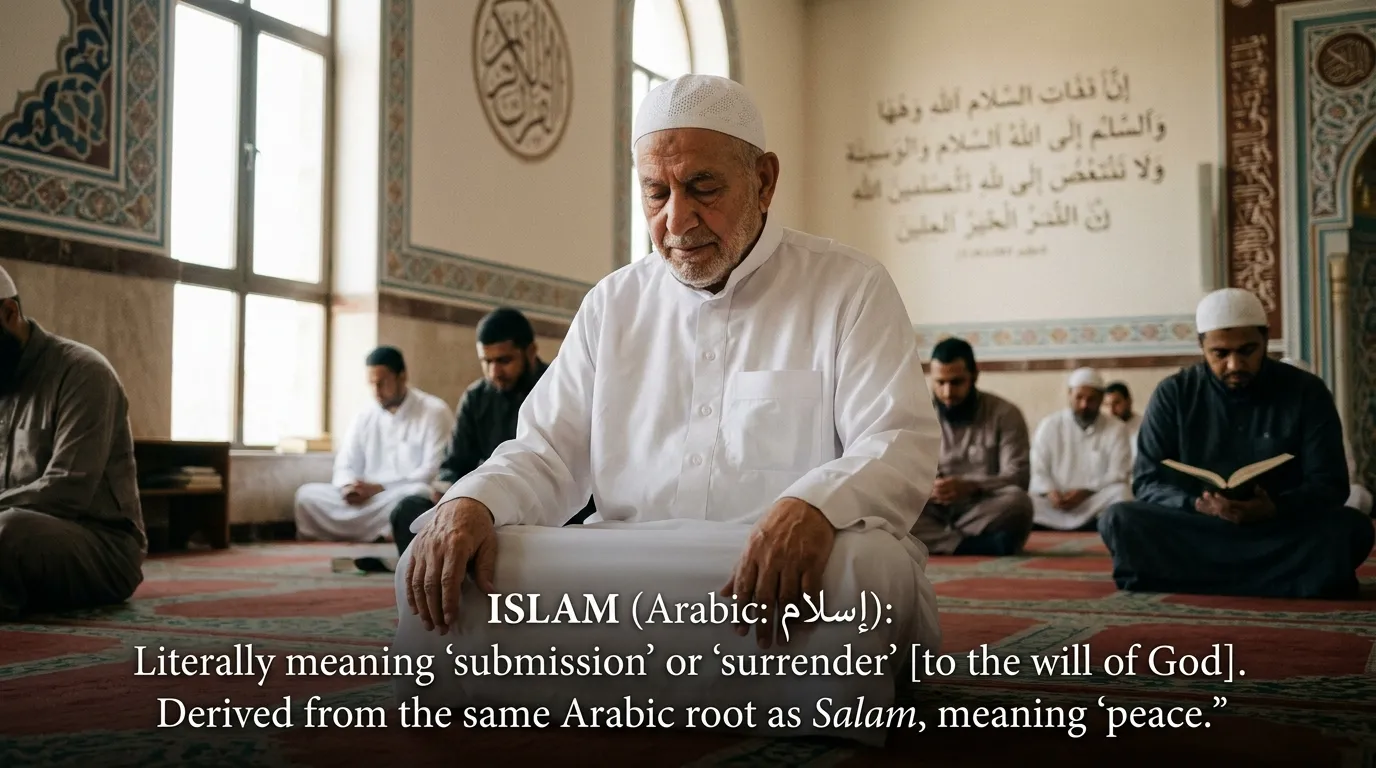
Islam is one of the most widely used words in the world. But many people do not know what it truly means.
The word itself carries a deep and beautiful meaning. It is not just the name of a religion. It is a word full of purpose and peace.
This article will explain the full meaning of the word Islam, how it is used, and what it stands for.
You are a student, a curious reader, or someone who just wants to learn, this guide is for you.
Definition and Meaning
The word Islam comes from the Arabic language. It is built from the root word S-L-M (س ل م), which is also the root of the Arabic word salaam, meaning peace. So right away, peace is at the heart of this word.
Islam means submission or surrender. More fully, it means willing submission to the will of God. In the Islamic faith, God is called Allah, which is the Arabic word for God. So when a person says they follow Islam, they are saying they choose to submit to God with full and willing acceptance.
The word Islam also carries the idea of safety and wholeness. This is why the words Islam and salaam (peace) share the same root.
Person who follows Islam is called a Muslim. This word also comes from the same Arabic root. A Muslim is one who submits. So both the religion and the name of its followers come from the same core idea of peaceful submission to God.
Usage and Examples
Word Islam is used in many ways in everyday life and in formal settings. Here are some clear examples of how it is used.
When someone says He converted to Islam, they mean that person chose to follow the Islamic faith. When a teacher says Islam is one of the world’s major religions, they are talking about the global faith that over 1.8 billion people follow today.
Word is also used in names. For example, the name Islam is a first name used in Arabic-speaking countries. It is a sign of pride in the faith. In phrases like Islamic art, Islamic law, or Islamic studies, the word Islamic is the adjective form of Islam.
Common Contexts and Applications
The word Islam shows up in many areas of life. Here are the most common places you will see or hear it.
In religious settings, Islam refers to the full system of belief and practice followed by Muslims. This includes the Five Pillars of Islam, which are: declaring faith (Shahada), praying five times a day (Salah), giving to charity (Zakat), fasting during the month of Ramadan (Sawm), and making a pilgrimage to Mecca at least once if able (Hajj).
In history and social studies, Islam is discussed as a major world religion that began in the 7th century CE in Arabia. The Prophet Muhammad is the central figure through whom the message of Islam was revealed, according to Muslim belief.
In law, the word Islam connects to Sharia, which is Islamic law. Sharia covers areas like family life, finance, and ethics, and it is drawn from the Quran (the holy book of Islam) and the Hadith (sayings and actions of the Prophet).
In culture, Islam shapes art, architecture, food, clothing, and daily habits for billions of people around the world.
Similar Terms or Alternatives
There are several related words and terms that are often used alongside or instead of Islam. Knowing these helps build a fuller picture.
Muslim As noted before, a Muslim is a person who follows Islam. The two words are closely related but not the same. Islam is the religion; Muslim is the person.
Salaam This is the Arabic word for peace. It shares the same root as Islam. Muslims greet each other with As-salamu alaykum, which means Peace be upon you.
Iman This means faith in Arabic. While Islam refers to the outward acts of submission, Iman refers to the inner belief in the heart. Both are key parts of being a Muslim.
Din This Arabic word means way of life or religion. Islam is often called the Din of Allah, meaning the way of life chosen by God.
Ihsan This means excellence or to worship God as if you see Him. It is a higher level of spiritual awareness in Islam.
These terms together build the full picture of what Islam means in both practice and belief.
Common Misconceptions
There are several wrong ideas about the word Islam and its meaning that are worth clearing up.
One common mistake is thinking that Islam means peace. This is close but not fully correct. Islam means submission (to God), and it comes from the same root as the word for peace. Peace is the result of that submission, not the direct translation.
Another wrong idea is that Islam is only for Arab people. In fact, Islam is a global religion. Most Muslims in the world are not Arab. The largest Muslim populations are in countries like Indonesia, Pakistan, Bangladesh, and Nigeria.
Some people think the word Islam is the name of the founder. This is also incorrect. The founder, or the one who received and shared the message, was the Prophet Muhammad. Islam is the name of the religion itself, not a person’s name.
There is also a wrong idea that Islam means a religion of the sword or that it promotes violence. This is false and not supported by the meaning of the word or the core teachings of the faith. The root of the word itself means peace, and the faith teaches mercy, justice, and care for others.
Finally, some people think that being Muslim and being Islamic mean the same thing. A Muslim is a person. Islamic is an adjective that describes things related to Islam, like Islamic art or Islamic law. The two words are used differently.
Frequently Asked Questions
What is the literal meaning of the word Islam?
The literal meaning of Islam is submission or surrender. Specifically, it means willing submission to the will of God. It also carries the idea of peace, safety, and wholeness, since it shares the same Arabic root as the word salaam, meaning peace.
What is the difference between Islam and Muslim?
Islam is the name of the religion. A Muslim is a person who follows that religion. Think of it this way: Christianity is the religion, and a Christian is the follower. In the same way, Islam is the religion, and a Muslim is the follower. Both words come from the same Arabic root.
Does Islam mean peace?
Not exactly. Islam means submission (to God), not peace directly. However, the word shares its root with the Arabic word for peace (salaam). In Islamic teaching, true peace comes as a result of submitting to God.
Who named the religion Islam?
According to Islamic belief, the name Islam was given by God (Allah) Himself. The word appears in the Quran, where God says that Islam is the chosen way of life for humanity. The Prophet Muhammad shared this message, but the name of the religion comes from the divine revelation, not from any human.
Is Islam the same as Muslim?
No. Islam is the name of the faith. Muslim is the name of the person who follows that faith. Saying I follow Islam and I am a Muslim mean the same thing, but the words Islam and Muslim are not interchangeable in all sentences.
How old is the word Islam?
The word Islam in its religious sense dates back to the 7th century CE, when the Quran was revealed to the Prophet Muhammad in Arabia. However, the Arabic root from which it comes is much older and has been part of the Arabic language for thousands of years.
Conclusion
The word Islam is more than just a name. It is a word rich with meaning. At its core, it means willing submission to God, with peace as both its root and its promise. The word comes from the Arabic root S-L-M, the same root as the word for peace.
Understanding the meaning of Islam helps us understand the lives of over 1.8 billion people around the world. It also helps break down wrong ideas and build real knowledge. Whether you are learning for school, for personal growth, or out of simple curiosity, knowing what Islam truly means is a great place to start.
Islam, at its heart, is a call to peace through surrender not to a person or a system, but to the one God who, in Islamic belief, created and loves all of humanity.
My name is Maya Angelou, and I am the creator of Meaningg.com. I am passionate about sharing knowledge, meanings, and useful information with readers around the world. Through Meaningg.com, I aim to make learning simple, engaging, and accessible for everyone. I enjoy researching, writing, and helping people discover the meaning behind words and ideas.