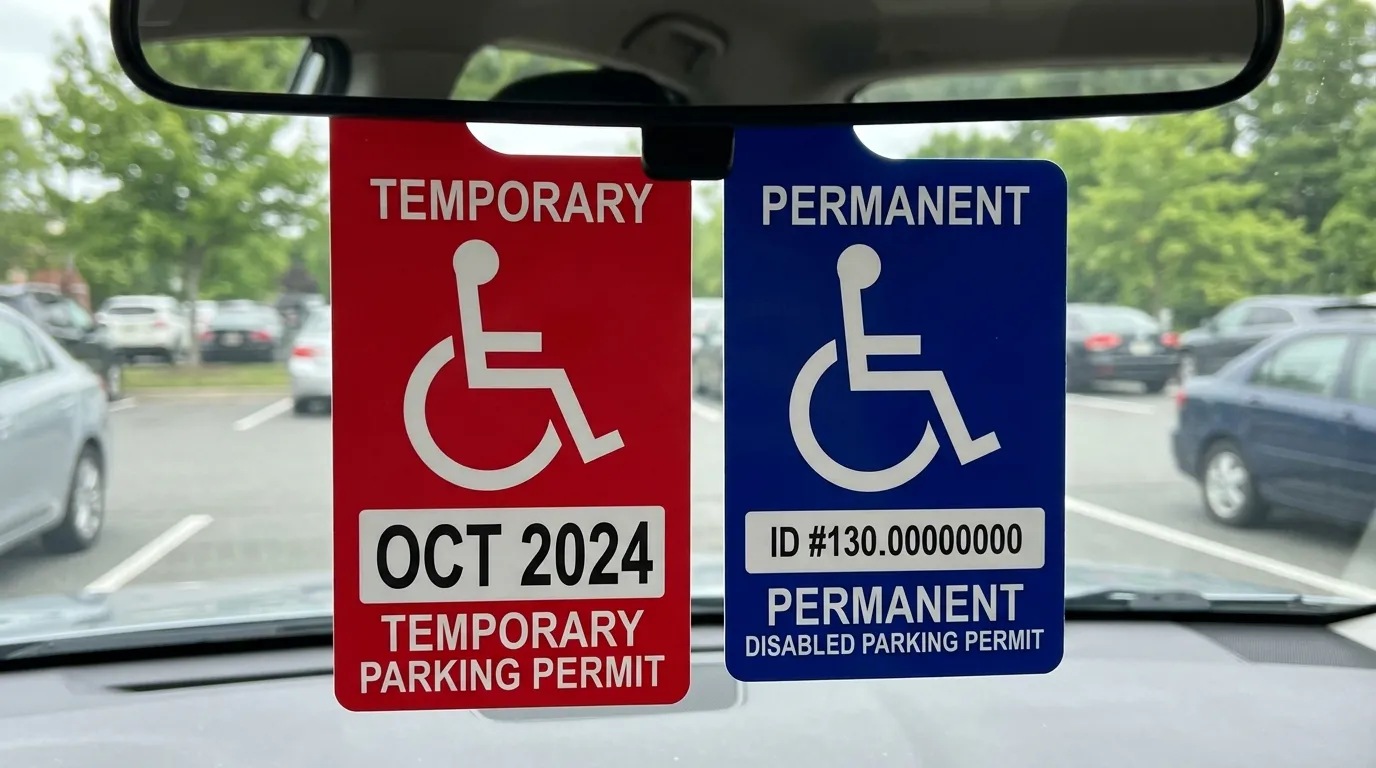
Have you ever seen a red placard hanging in a car near a handicap parking spot? You may have wondered what it means.
Is it the same as a blue one? Does it work the same way? These are great questions.
Many people do not know the difference between red and blue handicap placards.
Knowing the difference can help you or someone you love get the right placard. It can also help you avoid breaking the law by mistake.
A handicap placard is a small card or tag. You hang it from your rearview mirror when you park. It lets you park in special spots made for people with disabilities.
These spots are closer to buildings. They are wider too. This makes it easier for people who have trouble walking or moving around.
In the United States, there are two main types of placards. One is blue. One is red. Each one means something different.
In this article, we will focus on the red handicap placard. We will tell you what it means, who can get one, how long it lasts, and much more.
Definition and Meaning
A red handicap placard is a temporary disabled parking permit. The word temporary is the key word here. It means the placard is only for a short time. It is not meant to last forever.
The red color is used on purpose. It helps parking officers and others tell the difference between a short-term placard and a long-term one. A blue handicap placard is for people with a permanent disability. A red one is for people who have a short-term or short-lived condition that makes it hard to walk or move.
For example, say you broke your leg and had surgery. You cannot walk well for a few months. You would qualify for a red placard during that time. Once your leg heals, you return the placard or let it expire. You no longer need it.
The red handicap placard gives you the same parking rights as a blue one while it is valid. You can park in any handicap spot. You can also park at meters without paying in some states. But only while the placard is active and valid.
Usage and Examples
A red placard works just like a blue one when you use it. You hang it from your rearview mirror when you park. The front of the placard must face outward so others can read it. You must only use it when the person named on the placard is in the car or being dropped off or picked up.
Here are some real-life examples of when someone might use a red handicap placard:
A woman has knee replacement surgery. She cannot walk far for three months. Her doctor gives her a form. She takes it to the DMV. She gets a red placard for three to six months.
A man has a bad ankle fracture. He uses crutches for eight weeks. He gets a red placard so he can park closer to his job, his doctor’s office, and the store.
A child has a broken hip after an accident. The parents get a red placard so they can park close when taking the child to therapy.
In all these cases, the red placard helps during a hard time. When the person gets better, the placard expires or is turned in.
Common Contexts and Applications
Red placards are used in many places across the United States. Each state runs its own program. But most states follow the same basic rules set by the Americans with Disabilities Act (ADA).
You can use a red handicap placard at:
- Grocery stores Park close to the entrance when you cannot walk far.
- Hospitals and clinics Reach your doctor without a long walk.
- Work If your job has handicap spots, you can use them.
- Malls and shopping centers Park in the blue zone near the door.
- Airports Use designated spots when dropping off or picking up.
- Parking meters Many states let you park at meters for free or longer with a valid placard.
Some states have extra rules. For example, some states say the placard only works when the named person is present. Others may limit the time you can park even in a handicap spot. Always check your state’s rules to be sure.
Here is a simple table showing the main differences between a red and blue handicap placard:
| Feature | Red Placard | Blue Placard |
| Color | Red | Blue |
| Type | Temporary | Permanent |
| Duration | 6 months or less | 2 to 5 years (renewable) |
| Who gets it | Short-term disability | Long-term or permanent disability |
| Parking rights | Same as blue while valid | Full handicap parking rights |
| Renewal | May renew with doctor’s note | Renewed regularly |
Who Qualifies for a Red Handicap Placard
To get a red placard, you need to have a condition that limits your ability to walk. The condition does not have to be permanent. It just has to be real and current.
Common reasons people get a red placard include:
- A broken bone in the leg, ankle, or foot
- Surgery on the knee, hip, or spine
- A short-term illness that causes severe weakness
- A serious injury from an accident
- Pregnancy complications that limit walking (in some states)
- Recovery from a stroke or heart procedure
Your doctor must sign a form that says you have this condition. The form is then taken to the DMV or your state’s motor vehicle office. They process it and give you the red placard.
The key thing is that the disability must be temporary. Doctors usually say how long the condition will last. That time period is used to set the expiration date on the red placard.
How to Get a Red Handicap Placard
Getting a red placard is not hard. Here are the basic steps most states use:
First, talk to your doctor. Tell them about your condition and how it limits your movement. Ask if you qualify for a temporary disabled parking placard.
Second, your doctor fills out a state form. This form is called a medical certification form or disability certificate. Each state has its own version.
Third, you take the form to the DMV or your state’s motor vehicle agency. Some states let you do this online or by mail.
Fourth, you pay a small fee (if required). Some states charge nothing for a placard. Others charge a few dollars.
Fifth, you receive your red placard. It will have an expiration date printed on it. Do not use it after that date.
If your condition lasts longer than expected, many states allow you to renew the red placard. You will need another form from your doctor.
How Long Does a Red Handicap Placard Last
The length of time varies by state. But most red placards are valid for six months or less. Some states give them for as little as 30 to 90 days.
Here are a few examples:
- California Red placards are valid for six months.
- Texas Temporary placards last six months and can be renewed once with a doctor’s note.
- Florida Temporary placards last six months.
- New York Temporary placards last up to six months.
Most states follow a similar pattern. Always check your state’s DMV website for exact rules.
It is very important to not use an expired placard. Even if you still have the condition, using an expired placard can get you a ticket. It may also lead to losing your right to get another one.
Similar Terms or Alternatives
There are a few other terms you might hear when talking about handicap placards. It helps to know what they mean.
Blue placard This is the most common type. It is for people with a permanent disability. It lasts longer than a red one. You renew it every few years.
Disability license plate Instead of a hanging placard, some people have a special license plate with the wheelchair symbol. This works the same way as a blue placard. It is usually for people with a permanent disability.
Temporary disabled parking permit This is just another name for a red placard. You may see this term on your DMV paperwork.
ADA parking permit Some people use this term. It refers to any placard or plate that follows the rules of the Americans with Disabilities Act.
All of these give the user the right to park in handicap spots marked with the international wheelchair symbol. The big difference is how long they last and who qualifies.
Common Misconceptions
There are some things people get wrong about red handicap placards. Let’s clear them up.
Misconception 1: Red means less access than blue.
This is not true. A valid red placard gives you the same parking rights as a blue one. You can park in any handicap spot just the same.
Misconception 2: Anyone can use the placard, not just the named person.
This is wrong and illegal. The placard belongs to the person named on it. You can only use it when that person is in the car. Using someone else’s placard is a form of fraud. It can lead to heavy fines.
Misconception 3: You can renew a red placard forever.
This is not true. Red placards are meant to be temporary. If your condition becomes permanent, you should apply for a blue placard or a disability license plate instead.
Misconception 4: A red placard works in every country.
No. Handicap placard rules vary by country. A U.S. red placard may not be accepted in other countries. If you travel, check local laws.
Misconception 5: You don’t need a doctor’s note to get one.
Wrong. In all U.S. states, a doctor must certify your condition before you can get a red placard.
FAQs
1. What does a red handicap placard mean in the USA?
A red handicap placard means you have a temporary disability that makes it hard to walk. It gives you the right to park in handicap spots for a limited time, usually six months or less.
2. Is a red placard the same as a blue one?
They give you the same parking rights while valid. The difference is that red is temporary and blue is permanent. Blue placards last much longer and are for people with lasting disabilities.
3. Can I renew my red placard?
Yes, in most states you can renew it one or more times if your condition continues. You will need a new doctor’s note each time.
4. Can someone else use my red placard?
No. The placard is only for the person named on it. Someone else using your placard is illegal and can result in fines or loss of the permit.
5. What happens if I use an expired red placard?
You can get a parking ticket. In some states, the fine is very high. Always check your placard’s expiration date before using it.
6. Do I need to pay at parking meters with a red placard?
It depends on the state. Many states allow free parking at meters with a valid handicap placard, but not all. Check your state’s rules.
7. Can I get a red placard for a pregnancy?
Some states allow it for pregnancy complications that limit walking. A regular pregnancy may not qualify. Ask your doctor if your situation qualifies in your state.
Conclusion
A red handicap placard is a temporary disabled parking permit. It helps people who have a short-term injury or illness that makes it hard to walk. It gives you the same parking rights as a blue placard, but only for a limited time.
To get one, you need your doctor to fill out a form. Then you take it to the DMV. The placard will have an expiration date. Use it only while it is valid. And always remember, only the person named on the placard can use it.
If your condition gets better, you let the placard expire. If it becomes permanent, you can apply for a blue placard or a disability license plate instead.
Knowing what a red placard means helps you use it the right way. It also helps you understand the rights of others who use these permits. These parking spaces exist to make life a little easier for people going through a tough time.

My name is Walt Whitman, and I proudly run Meaniingg.com. I enjoy researching and sharing meanings, biographies, quotes, and useful information that help people expand their knowledge. My goal is to create easy-to-understand content that informs, inspires, and adds value to readers around the world.