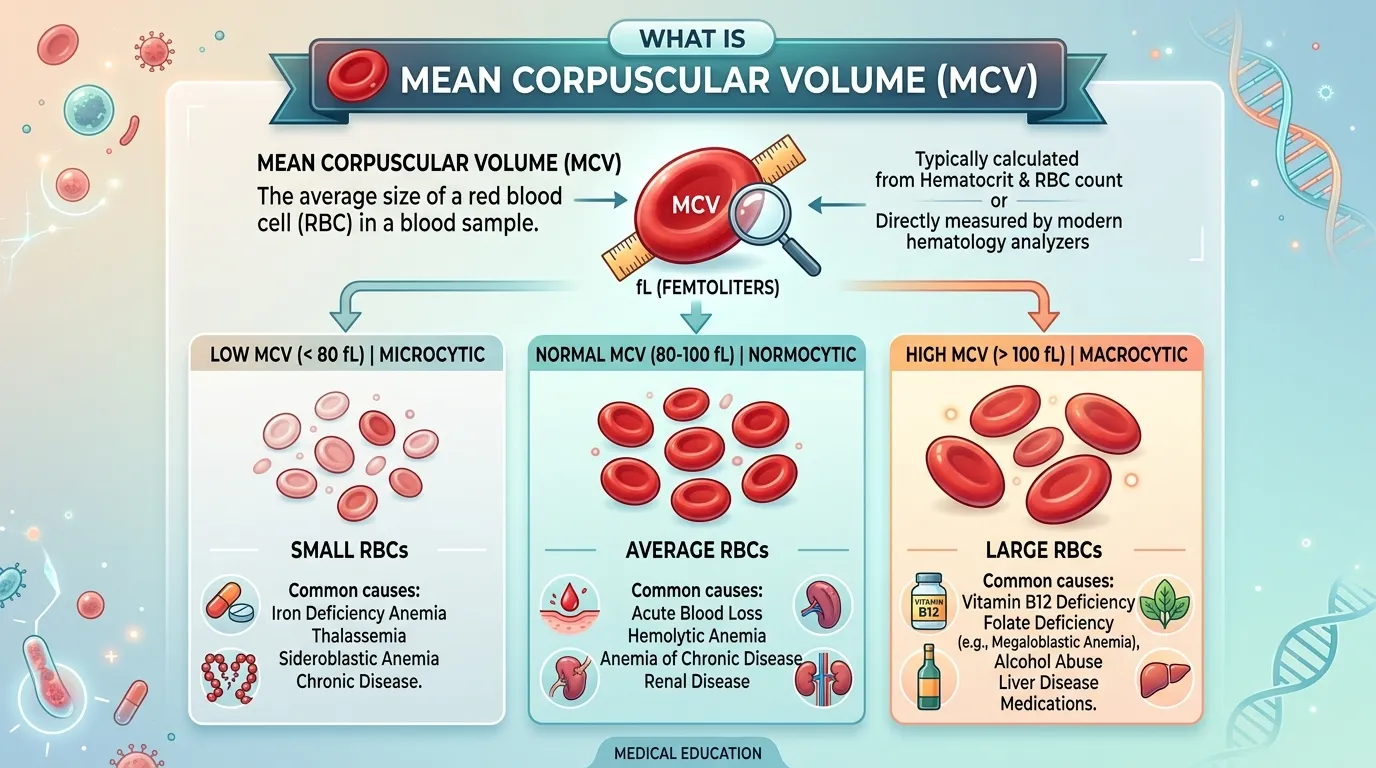
Mean corpuscular volume (MCV) is a blood test value that tells you the average size of your red blood cells.
It is part of a common blood test called the complete blood count (CBC). Your doctor uses MCV to learn about your health and find out why you might be feeling tired, weak, or sick.
Red blood cells carry oxygen from your lungs to the rest of your body. If these cells are too big or too small, your body may not get enough oxygen. That is why MCV matters so much.
This article will explain what MCV means, what the normal range is, what happens when it is too high or too low, and what questions people ask most often about it.
What Does Mean Corpuscular Volume Mean
Mean corpuscular volume is a number that shows the average size of a single red blood cell. The word “mean” here means “average.” The word “corpuscular” means “related to cells.” So MCV = the average size of your red blood cells.
MCV is measured in a unit called femtoliters (fL). One femtoliter is a very tiny amount one quadrillionth of a liter. You do not need to know the math. You just need to know the number your doctor reports.
The normal MCV range for most adults is 80 to 100 fL. Some labs may use a slightly different range, like 80 to 96 fL or 80 to 100 fL. Always check the reference range on your lab report.
When your MCV is in the normal range, your red blood cells are the right size. When it is too high or too low, it is a clue that something may be wrong.
How Is MCV Measured
MCV is part of the complete blood count (CBC), which is one of the most common blood tests your doctor orders. A lab tech draws a small sample of your blood. Then a machine counts and measures your red blood cells.
The machine does the math for you. It figures out the average size of all the red blood cells in the sample. That number is your MCV.
Your lab report will show MCV along with other values like hemoglobin, hematocrit, RBC count, MCH (mean corpuscular hemoglobin), and MCHC (mean corpuscular hemoglobin concentration). All of these work together to help your doctor understand your blood health.
Normal MCV Range
| MCV Level | Range | What It Means |
| Low (Microcytic) | Below 80 fL | Red blood cells are too small |
| Normal (Normocytic) | 80 – 100 fL | Red blood cells are normal size |
| High (Macrocytic) | Above 100 fL | Red blood cells are too big |
These ranges may vary slightly between labs. Your doctor will look at your number in context with your other results.
What Happens When MCV Is Low
When MCV is below 80 fL, your red blood cells are smaller than normal. Doctors call this microcytic anemia. “Micro” means small and “cytic” means cell.
The most common reason for a low MCV is iron deficiency anemia. This means your body does not have enough iron to make healthy red blood cells. Iron is needed to make hemoglobin, the protein in red blood cells that carries oxygen.
Other causes of low MCV include:
Thalassemia is a group of blood disorders passed down through families. In thalassemia, the body makes an abnormal form of hemoglobin. This leads to smaller and fewer red blood cells.
Anemia of chronic disease can also cause a low MCV. This happens when a long-term illness like kidney disease, cancer, or an infection affects how your body uses iron.
Lead poisoning can lower MCV as well. Lead stops the body from making hemoglobin the right way.
Symptoms of a low MCV may include:
- Feeling very tired
- Pale skin
- Shortness of breath
- Dizziness
- Headache
What Happens When MCV Is High
When MCV is above 100 fL, your red blood cells are larger than normal. Doctors call this macrocytic anemia. “Macro” means large.
The most common causes of a high MCV are:
Vitamin B12 deficiency is a very common cause. Vitamin B12 helps your body make DNA, which red blood cells need to grow and divide. Without enough B12, red blood cells grow too large and do not work well. People who do not eat meat or dairy, older adults, and people with certain gut problems are at higher risk.
Folate (vitamin B9) deficiency works the same way. Folate is also needed to make red blood cells. Not eating enough leafy greens, beans, or fruits can lead to low folate. Pregnant women need extra folate to protect the baby.
Alcohol use is a very common cause of high MCV. Alcohol affects how the liver processes folate and B12. Even without a full B12 or folate deficiency, heavy alcohol use can cause red blood cells to grow too large.
Hypothyroidism means the thyroid gland is underactive. This slows down many body functions, including how red blood cells are made. It can raise MCV.
Certain medicines like methotrexate, hydroxyurea, and some HIV drugs can also raise MCV. These drugs affect how quickly cells divide.
Symptoms of a high MCV include:
- Tiredness and weakness
- Numbness or tingling in the hands or feet (especially with B12 deficiency)
- Memory problems or brain fog
- Sore or swollen tongue
- Yellow skin (jaundice)
MCV and Anemia What Is the Connection
Anemia means your blood does not carry enough oxygen to meet your body’s needs. It can happen because you have too few red blood cells, or because the ones you have are too small or do not work well.
MCV helps doctors figure out what type of anemia you have. This matters because different types of anemia need different treatments.
For example, if you have a low MCV and low iron stores, your doctor will likely suggest iron supplements or changes in your diet. But if you have a high MCV and low B12, you will need B12 injections or supplements instead. Giving someone iron when they actually need B12 will not help.
That is why MCV is such a useful tool. It narrows down the cause and helps your doctor choose the right fix.
MCV During Pregnancy
Pregnancy changes many things in your blood. Blood volume grows a lot during pregnancy, and the body needs more iron and folate to support the baby’s growth.
MCV can be slightly higher during pregnancy. This is normal in many cases. But a very high MCV may signal a folate or B12 problem, which can affect the baby.
Pregnant women are often told to take prenatal vitamins that include folate (or folic acid) and iron. This helps prevent anemia and supports healthy red blood cell production.
MCV in Children and Older Adults
Normal MCV ranges can differ slightly by age.
In newborns and young babies, MCV is often higher than in adults. This is normal. As children grow, their MCV drops to adult levels.
In older adults, low folate and low B12 are more common. This is because the gut absorbs these nutrients less well with age. Older adults may also take medicines that affect MCV. Doctors often check MCV along with B12 and folate levels in older patients.
Similar Terms You May See on Your Lab Report
If you look at your blood test results, you may see other terms near MCV. Here is what they mean:
MCH (Mean Corpuscular Hemoglobin) This is the average amount of hemoglobin in each red blood cell. Normal range is about 27–33 picograms (pg).
MCHC (Mean Corpuscular Hemoglobin Concentration) This is the average concentration of hemoglobin in red blood cells. Normal range is about 32–36 g/dL.
RDW (Red Cell Distribution Width) This shows how much the size of your red blood cells varies. A high RDW means your cells are very different in size. A normal RDW means they are all roughly the same size. RDW helps doctors tell apart different types of anemia.
Together, MCV and RDW give a fuller picture. For example, early iron deficiency may show a high RDW before MCV even drops. This can help catch problems sooner.
Common Misconceptions About MCV
Misconception 1: A high or low MCV means you definitely have anemia.
Not always. MCV can be abnormal even if your red blood cell count and hemoglobin are normal. For example, early B12 deficiency may raise MCV before anemia shows up. MCV is just one piece of the puzzle.
Misconception 2: You can fix a low MCV by just eating more iron.
Not always. If your low MCV is from thalassemia, taking extra iron will not help and could even be harmful. It is important to find the actual cause first.
Misconception 3: A high MCV always means you drink too much alcohol.
Alcohol is a common cause, but not the only one. B12 deficiency, folate deficiency, thyroid problems, and certain medicines can all raise MCV. Your doctor needs the full picture before drawing a conclusion.
Misconception 4: MCV is the same as hemoglobin.
No. Hemoglobin measures how much oxygen-carrying protein is in your blood. MCV only measures the size of red blood cells. They are related but different things.
FAQs
What is a normal MCV level?
A normal MCV level for most adults is between 80 and 100 femtoliters (fL). Some labs may use a slightly narrower range. Always check the reference range on your own lab report, since different labs may use slightly different values.
What does it mean if my MCV is low?
A low MCV (below 80 fL) means your red blood cells are smaller than normal. The most common cause is iron deficiency anemia. Other causes include thalassemia and anemia of chronic disease. Your doctor will order more tests to find out why.
What does it mean if my MCV is high?
A high MCV (above 100 fL) means your red blood cells are larger than normal. Common causes include vitamin B12 deficiency, folate deficiency, alcohol use, and certain medicines. Your doctor may check your B12 and folate levels to find the cause.
Can I have a normal MCV and still have anemia?
Yes. This is called normocytic anemia. It happens when your red blood cells are normal in size but there are not enough of them. Causes include blood loss, kidney disease, or a problem with the bone marrow where blood cells are made.
Does MCV change with age?
Yes. Newborns have higher MCV levels that come down as they grow. Older adults are more likely to have high MCV because they absorb B12 and folate less well. Doctors consider age when looking at MCV results.
Can dehydration affect my MCV?
Dehydration changes the concentration of your blood. It can affect some blood test values. However, MCV reflects the actual size of the red blood cells, which is less likely to change with mild dehydration. Still, being well hydrated before a blood test is always a good idea.
Conclusion
Mean corpuscular volume (MCV) is a simple but powerful number. It tells your doctor the average size of your red blood cells. A normal MCV means your cells are healthy in size. A low MCV points to problems like iron deficiency. A high MCV points to issues like B12 or folate deficiency, or heavy alcohol use.
MCV is just one part of a bigger blood test called the CBC. Your doctor looks at MCV along with many other values to get the full picture of your blood health. If your MCV is abnormal, do not panic. It is a clue not a final answer. More tests will help find the root cause.
The best thing you can do is talk to your doctor, ask questions, and follow the plan they give you. Most causes of abnormal MCV can be treated well when found early.

My name is Maya Angelou, and I am the creator of Meaningg.com. I am passionate about sharing knowledge, meanings, and useful information with readers around the world. Through Meaningg.com, I aim to make learning simple, engaging, and accessible for everyone. I enjoy researching, writing, and helping people discover the meaning behind words and ideas.