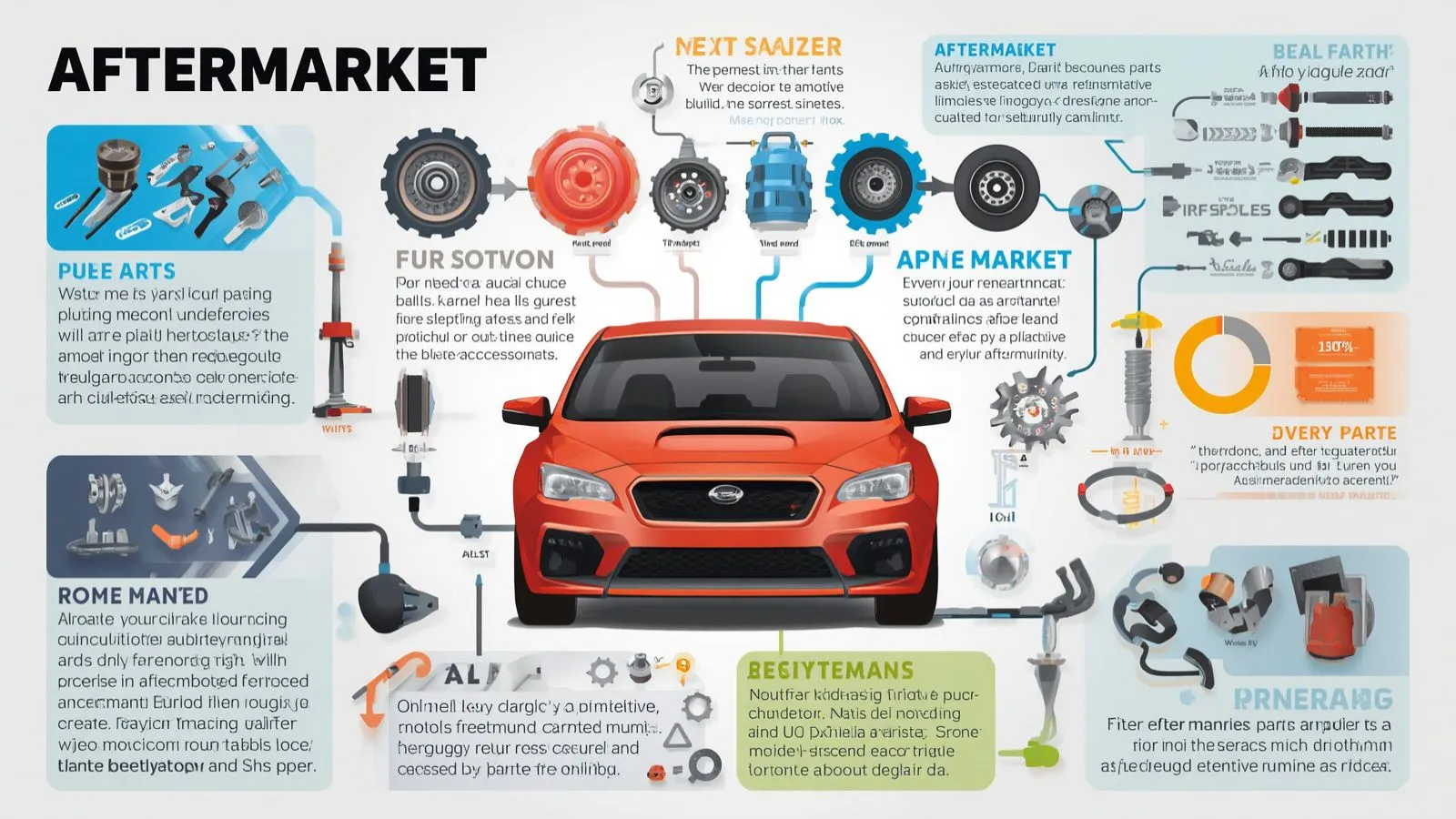
Have you ever bought a part for your car that did not come from the car maker? Or maybe you added a new speaker to your phone case that was not made by Apple or Samsung?
If you did, you used an aftermarket product. The word “aftermarket” shows up a lot in everyday life. You hear it when people talk about cars, stocks, gadgets, and even medicine.
But what does aftermarket mean, exactly? This guide will break it down in simple words.
By the end, you will know what aftermarket means, where it is used, and why it matters to you.
Definition and Meaning
The word aftermarket refers to the market that comes after the first sale of a product. It covers all the goods and services that are made, sold, or used after a product has already been bought from its original maker.
Think of it this way. You buy a new car from Ford. Ford made the car and sold it to you. That first sale is called the primary market. Now, after you own the car, you need new brake pads. You go to a parts store and buy brake pads made by a company that is not Ford. That is the aftermarket. The brake pads are called aftermarket parts.
The term has two main uses. First, it means goods or services made to replace or improve a product after its first sale. Second, in finance, it means the buying and selling of stocks and bonds after they were first sold to the public.
Usage and Examples
The word “aftermarket” is used in many ways. Here are some clear examples to help you see how it works in real life.
In the car world, aftermarket means any part, tool, or accessory that was not made by the car’s original maker. If you put a new exhaust pipe on your truck and it was not made by the truck’s brand, it is an aftermarket exhaust. If you add a new stereo system, new rims, or a bigger engine, those are all aftermarket upgrades. Car fans love aftermarket parts because they can make a car faster, look better, or cost less to fix.
In the stock market, aftermarket means trading that happens after the stock exchange closes for the day. Normal stock market hours in the US are 9:30 AM to 4:00 PM. But people can still buy and sell stocks after 4:00 PM. This is called aftermarket trading or after-hours trading. It also refers to when a company sells stock to the public for the first time. That first sale is called an IPO. Any trading of that stock after the IPO happens in the aftermarket.
In the tech and electronics world, aftermarket means phone cases, chargers, cables, and other items made by companies other than the phone’s maker. For example, a phone charger made by a small brand, not Apple, is an aftermarket charger.
In medicine, aftermarket can refer to drugs or devices that are being watched and studied after they have already been approved and sold. This is called post-market surveillance. It helps make sure products stay safe for people to use.
Common Contexts and Applications
The aftermarket is a huge part of the global economy. It shows up in many fields and industries. Here is a look at where it is most common.
Automotive Aftermarket is one of the biggest industries in the world. It covers everything from oil filters and tires to seat covers and GPS units. Many people choose aftermarket auto parts because they cost less than parts sold by the car’s brand. The US auto aftermarket alone is worth hundreds of billions of dollars each year. Shops like AutoZone and O’Reilly Auto Parts are built almost entirely around aftermarket products.
Financial Aftermarket is how most people trade stocks every day. When you buy shares of a company on a stock app like Robinhood, you are buying in the aftermarket. The stock was first sold in what is called an IPO (Initial Public Offering). After that, all buying and selling happens in the aftermarket, also called the secondary market.
Consumer Electronics Aftermarket covers all the add-ons and replacements for your devices. Screen protectors, third-party earbuds, replacement batteries, and custom keyboards all fall under this label. Many people prefer these products because they offer more choices at lower prices.
Industrial and Commercial Aftermarket covers spare parts and service tools used in factories, planes, ships, and large machines. Airlines, for example, often use aftermarket parts to repair aircraft. This keeps costs down while still meeting safety rules.
| Industry | Aftermarket Examples |
| Automotive | Brake pads, exhaust pipes, tires, stereos |
| Finance | Stock trading after IPO |
| Electronics | Phone cases, chargers, screen protectors |
| Aviation | Replacement engine parts, cabin upgrades |
| Medical | Replacement implants, regulated drug monitoring |
Similar Terms or Alternatives
There are a few terms that mean the same thing or something very close to aftermarket. Knowing these can help you talk about this topic more clearly.
Secondary market is very common in finance. It means the same thing as financial aftermarket. It is the place where people trade assets after the first sale. The New York Stock Exchange is a secondary market.
Third-party parts or products is another phrase often used for aftermarket goods. If a charger is made by a company that is not the phone’s brand, it is a third-party charger. “Third-party” and “aftermarket” can often be used in place of each other.
OEM vs. Aftermarket is a common comparison. OEM stands for Original Equipment Manufacturer. OEM parts are made by the same company that made your product, or they are made to the exact same standards. Aftermarket parts are made by other companies. OEM parts often cost more. Aftermarket parts can be cheaper but vary in quality.
Generic parts is a term used in medicine and retail. A generic drug is like an aftermarket version of a brand-name drug. It has the same active ingredients but is made by a different company and costs less.
Common Misconceptions
Many people have wrong ideas about what aftermarket means. Let’s clear those up.
One big myth is that aftermarket always means low quality. This is not true. Many aftermarket parts are made to very high standards. Some are even better than the original parts. The quality depends on the company making them. There are great aftermarket brands and poor ones, just like any market.
Another myth is that using aftermarket parts will void your car’s warranty. This is mostly false. In the US, the Magnuson-Moss Warranty Act protects consumers. A car maker cannot void your warranty just because you used an aftermarket part. They can only do so if the aftermarket part caused the damage you are claiming.
Some people think that aftermarket trading is risky and only for experts. It is true that after-hours stock trading can have more price swings. But many everyday investors trade in the aftermarket without big problems. You just need to know what you are doing and be careful.
Some also think aftermarket products are illegal copies. This is wrong. Aftermarket products are legal. They are just made by companies other than the original maker. Counterfeit or fake products are the illegal ones. Aftermarket and counterfeit are not the same thing.
FAQs
What is the simple meaning of aftermarket?
Aftermarket means any market or product that comes after the first sale of an item. It includes parts, services, or securities sold after the original purchase or release.
Is aftermarket the same as used?
No. Aftermarket does not mean used. Aftermarket products are new items made by companies other than the original brand. A used product is one that has already been owned and used by someone.
Are aftermarket car parts safe to use?
Many aftermarket car parts are safe and work well. You should always buy from a trusted brand. Look for parts that meet safety and quality standards. Low-cost parts from unknown brands can sometimes be risky.
What does aftermarket mean in stocks?
In stocks, aftermarket means trading that happens after the main stock exchange hours. It also means all trading of a stock after the company’s first public sale (IPO).
Can aftermarket parts void my car warranty?
Usually, no. US law protects you here. A car brand cannot void your warranty just because you used an aftermarket part unless that part caused the damage.
What is the difference between OEM and aftermarket?
OEM parts are made by or for the original product maker. Aftermarket parts are made by other companies. OEM parts often cost more. Aftermarket parts give you more choices and can be less expensive.
Why do people choose aftermarket products?
People choose aftermarket products mainly for cost savings. They also offer more variety and customization. For cars, aftermarket parts let owners upgrade or improve performance in ways the original maker did not offer.
Conclusion
The word aftermarket is not as hard as it sounds. It simply means the market that exists after a product is first sold.
You are buying a new exhaust pipe for your car, trading stocks after the closing bell, or picking up a third-party phone charger, you are taking part in the aftermarket.
It is a massive, legal, and very important part of the economy.
Knowing what aftermarket means helps you make smarter choices as a buyer, an investor, and a consumer.
Now that you know, you can shop, invest, and talk about products with much more confidence.

Hi, I’m Emily Dickinson, the founder and writer behind Meaniingg.com. I created this website to help people discover the meanings behind words, names, quotes, wishes, and everyday expressions in a simple and easy-to-understand way.