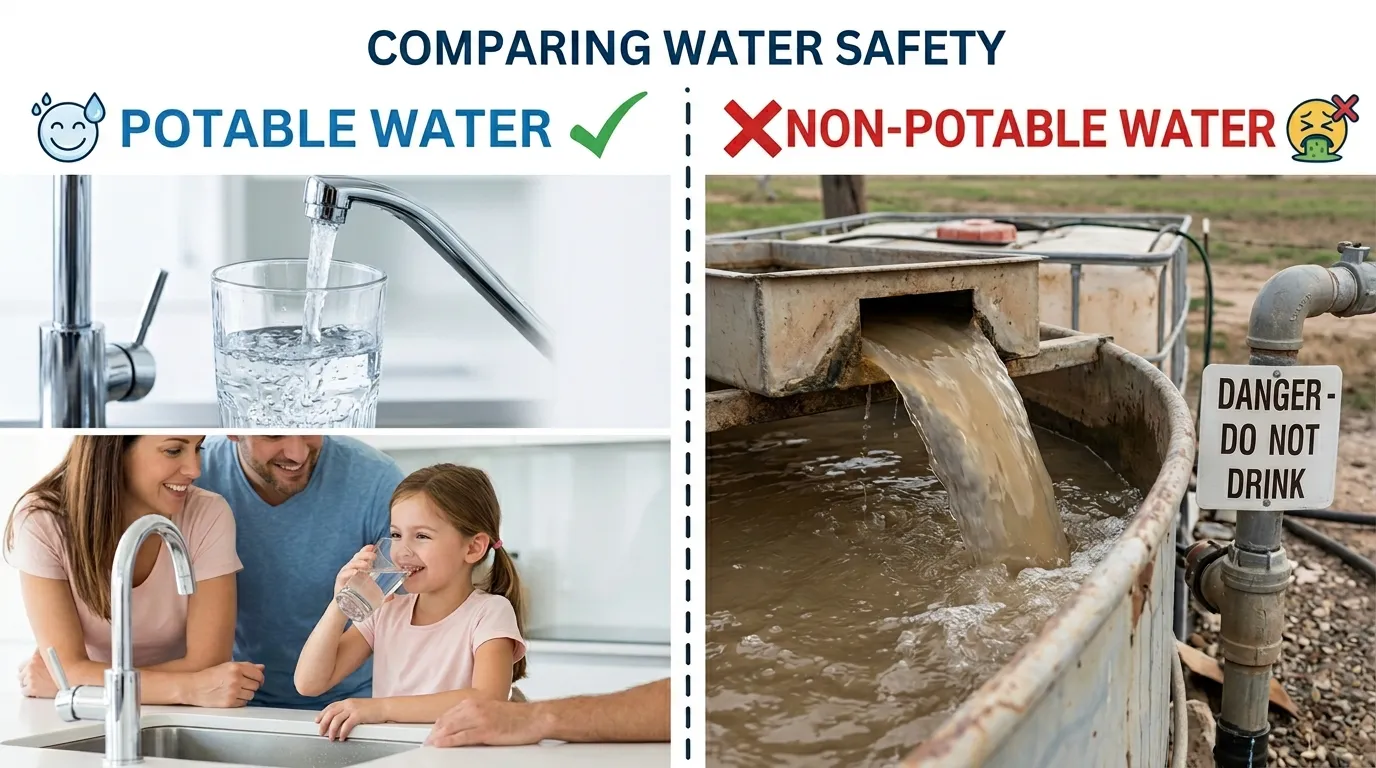
Water is all around us. We see it in rivers, lakes, and rain. But not all water is safe to drink. Have you ever heard someone say potable water?
Maybe you saw it on a sign at a campsite or heard it on the news. It sounds like a fancy word. But it has a simple and very important meaning.
Knowing what potable water means can keep you safe.
It can help you make smart choices every day. In this article, we will break it all down for you in plain, easy English.
Definition and Meaning
Potable water means water that is safe to drink. The word potable comes from the Latin word potare, which means to drink. So potable water is simply drinking water water that will not make you sick.
Potable water is clean. It has no bad germs, no harmful chemicals, and no dirty stuff in it. You can drink it, cook with it, and brush your teeth with it without worry.
The word is used a lot in science, health, and law. But in everyday life, most people just say drinking water. Both mean the same thing.
If water is not potable, it means it is not safe to drink. Drinking non-potable water can make you very sick. It can cause stomach pain, vomiting, and even very serious diseases.
Usage and Examples
You will hear or see the word potable in many places. Here are some real-life examples.
At a campsite, you might see a sign that says Potable Water Here. That means the tap or fountain at that spot has safe drinking water. Other taps at the campsite may only be for washing hands or rinsing gear not for drinking.
On a boat or ship, crew members talk about potable water all the time. Ships carry two kinds of water. One kind is for drinking and cooking. The other is for cleaning the deck or flushing toilets. The drinking kind is called potable water.
During a storm or flood, news reporters often say things like Residents are urged to boil water as the potable water supply has been affected. This means the normal safe drinking water has been mixed with dirty water, and people must boil it first before drinking.
In the military, soldiers in the field must find or create potable water. They use filters, tablets, and other tools to turn stream or river water into safe drinking water.
In cities and towns, the water that comes out of your kitchen faucet is potable water. Water companies clean and treat the water before sending it to your home. They test it often to make sure it is safe.
Common Contexts and Applications
Potable water comes up in many important areas of life. Let us look at some of the key ones.
Public Health is one of the biggest areas. Having safe drinking water is one of the most important things a community needs. Without it, diseases spread fast. Things like cholera, typhoid, and dysentery come from dirty water. Public health workers work hard to make sure people have access to potable water every day.
Disaster Relief is another big area. When a flood, earthquake, or hurricane hits, the water supply can get dirty very fast. Aid workers rush in with bottled water and water purification tools. Their job is to bring potable water to people who need it most.
Construction and Buildings also rely on this term. When builders put in water pipes for a home or office, they must follow rules about potable water systems. These pipes must be made from safe materials so the water inside stays clean all the way to your glass.
Outdoor and Survival Settings use this term a lot too. Hikers and campers must know how to find or make potable water when they are far from home. They carry water filters, boiling equipment, or purification tablets to make river or lake water safe to drink.
Agriculture and Food Safety also connect to potable water. Farms must use safe water when growing food that people will eat raw, like lettuce or strawberries. If dirty water touches the food, it can make people sick even after the food is washed.
Here is a simple table to show where potable water matters most:
| Area | Why Potable Water Matters |
| Public health | Prevents waterborne diseases |
| Disaster relief | Keeps people alive after emergencies |
| Construction | Safe pipes mean safe water at home |
| Outdoor survival | Keeps hikers and campers safe |
| Agriculture | Keeps raw food safe to eat |
| Schools and hospitals | Protects children and sick people |
Similar Terms and Alternatives
There are several words and phrases that mean the same thing as potable water or something very close to it.
Drinking water is the most common one. Most people use this in everyday talk. It means the same as potable water water that is safe to drink.
Safe water is another way to say it. This term is used a lot in health campaigns and by groups like the World Health Organization (WHO).
Treated water means water that has been cleaned by a water treatment plant. Most treated water is potable, but the word treated just means it went through a cleaning process.
Purified water means water that had almost all impurities removed. Bottled water that says purified has gone through extra cleaning steps like reverse osmosis or distillation.
Clean water is a general term. It often means potable water, but it can sometimes just mean water that looks clear, even if it still has germs in it. So clean water and potable water are close in meaning, but not always exactly the same.
The opposite of potable water is non-potable water. You may also see the term contaminated water or unsafe water to describe water you should not drink.
Common Misconceptions
There are some things people get wrong about potable water. Let us clear them up.
Misconception 1: If water looks clear, it is safe to drink. This is not true. Water can look totally clear and still have harmful germs or chemicals in it. Many dangerous things in water are invisible to the eye. That is why water must be tested, not just looked at.
Misconception 2: All bottled water is safer than tap water. This is not always true. In the United States, tap water in most cities is tested very often and meets strict safety rules. Some bottled water comes from the same source as tap water. The U.S. Environmental Protection Agency (EPA) sets rules for tap water. The U.S. Food and Drug Administration (FDA) sets rules for bottled water. Both are held to high standards.
Misconception 3: Boiling water always makes it fully safe. Boiling kills most germs like bacteria and viruses. But boiling does not remove chemical pollution, heavy metals like lead, or salt from seawater. So boiled water is much safer from germs, but it may still have other problems.
Misconception 4: Water from a stream or spring in nature is always safe to drink. Even water that looks pure and flows fast in nature can have harmful bacteria or parasites. Animals, waste, and pollution upstream can make it unsafe. Always treat natural water before drinking it.
Misconception 5: Potable water and distilled water are the same. Distilled water is very pure it has had almost everything removed, including minerals. Potable water can still have natural minerals in it. In fact, some minerals like calcium and magnesium are good for you. So distilled water is very clean but not the same as potable water.
FAQs
What is the simple meaning of potable water?
Potable water means water that is safe for humans to drink. It is free from harmful germs, chemicals, and dirt. You can drink it, cook with it, and use it for brushing your teeth without getting sick.
Is tap water potable?
In most U.S. cities and towns, yes. Tap water goes through a treatment process to remove germs and harmful materials. Water companies test it often. However, in some older homes, lead pipes can be a problem. If you are not sure about your tap water, you can get it tested or use a filter.
What makes water non-potable?
Water becomes non-potable when it has germs like bacteria, viruses, or parasites. It also becomes unsafe when it has too many chemicals, heavy metals like lead or mercury, or other pollutants. Floodwater, untreated river water, and water from broken pipes can all be non-potable.
How do you make non-potable water potable?
There are a few ways. Boiling kills most germs. Water filters remove dirt and some chemicals. Purification tablets kill bacteria and viruses. Water treatment plants use a mix of filtering, chemicals like chlorine, and other steps to clean large amounts of water. In very dry places, people even turn seawater into drinking water through a process called desalination.
Why is it called potable and not just drinkable?
The word potable comes from Latin and has been used in science and law for a very long time. It is a formal, specific term used in official documents, safety signs, and health guidelines. In everyday talk, most people do say drinkable or drinking water, but potable is the technical term.
How much potable water do people need each day?
Health experts say adults need about 2 to 3 liters of water per day from all sources, including food. For drinking alone, about 8 cups (around 2 liters) is a common guide. Needs can go up in hot weather or when you are very active.
Is there a global shortage of potable water?
Yes. This is a serious problem. According to the World Health Organization, billions of people around the world do not have safe drinking water at home. Climate change, pollution, and growing populations are making the problem worse. Getting clean, potable water to everyone on Earth is one of the biggest challenges people face today.
Conclusion
Potable water is simply water that is safe to drink. The word may sound technical, but the idea is very easy to understand. It is one of the most important things in human life. Without it, we cannot survive.
You see the word on a campsite sign, hear it on the news, or read it in a health report, now you know exactly what it means.
You also know where it comes from, how water becomes potable, and why it matters so much.
Clean, safe drinking water is not something everyone has. Many people around the world are working hard to change that. The more we understand what potable water means and why it matters, the better we can protect it and make sure everyone has access to it.
Next time you turn on your tap and fill a glass with clean water, remember how important that moment really is.

Hi, I’m Emily Dickinson, the founder and writer behind Meaniingg.com. I created this website to help people discover the meanings behind words, names, quotes, wishes, and everyday expressions in a simple and easy-to-understand way.