Have you ever had a urine test and heard that protein was found in it? That can feel scary. But don’t panic yet.
Having protein in your urine is something many people deal with. It can mean different things depending on how much protein is there and how long it has been there.
Your kidneys work hard every single day. They filter your blood and remove waste. Normally, they keep protein inside your body.
Protein is important. It helps build muscles, fight infections, and carry nutrients. So when protein shows up in your urine, it means something may be going on with your kidneys or your overall health.
This article will explain what it means to have protein in your urine. We will cover the causes, symptoms, risks, and what you can do about it.
By the end, you will have a clear picture of what is happening and what steps to take next.
Definition and Meaning
Proteinuria is the medical word for protein in the urine. “Proteinuria” comes from two words protein and urine. It simply means your urine has more protein than it should.
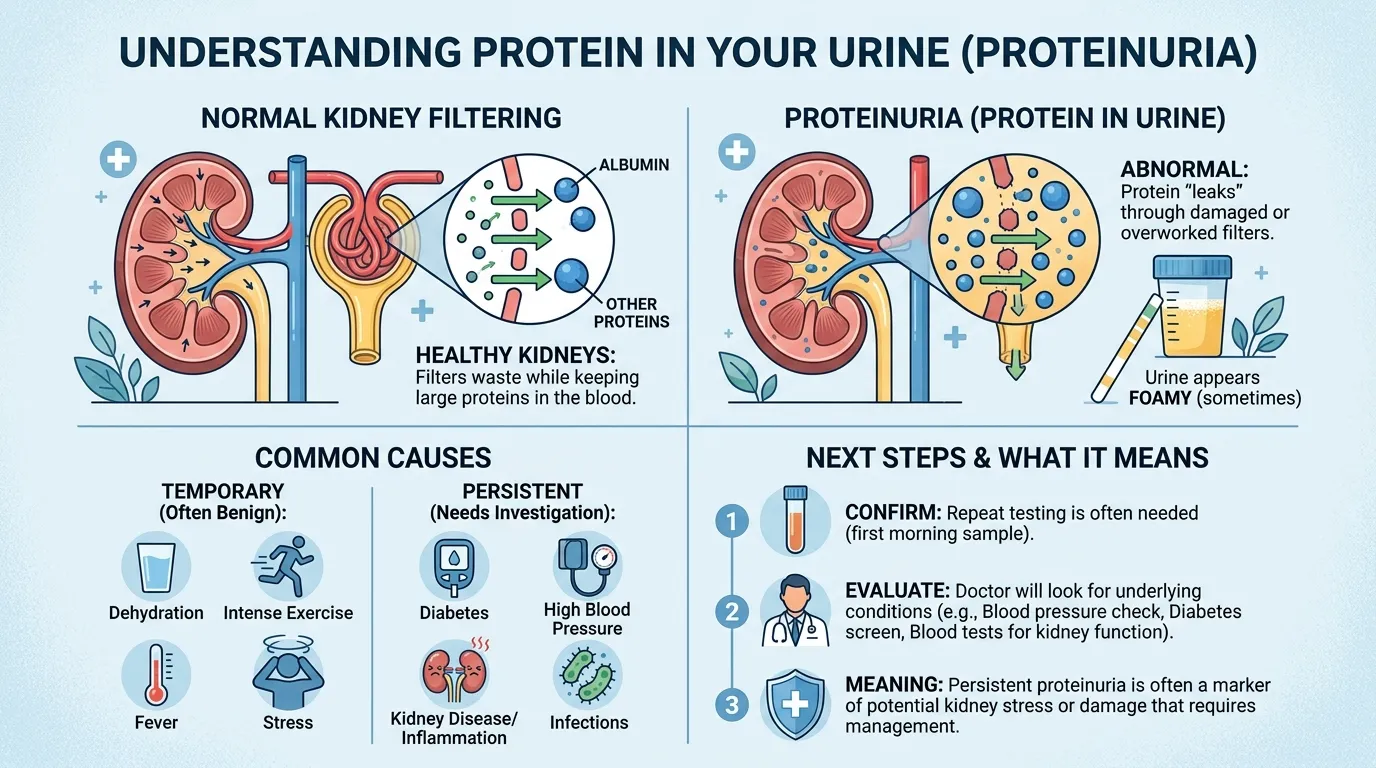
Normally, your kidneys act like a filter. They let waste and extra water pass through. But they keep bigger things, like protein, in your blood. When your kidneys are working well, very little protein gets into your urine. Doctors say a healthy amount is less than 150 milligrams per day. If your urine has more than that, you have proteinuria.
The most common type of protein found in urine is called albumin. When albumin leaks into the urine, it is called albuminuria. Both words are used by doctors and mean very similar things.
There are different levels of proteinuria. A small amount is called microalbuminuria or mild proteinuria. A large amount is called macroalbuminuria or severe proteinuria. The amount matters a lot when a doctor tries to figure out what is wrong.
What Causes Protein in Your Urine?
There are many reasons why protein might show up in your urine. Some reasons are harmless and go away on their own. Others can be signs of a serious health problem.
Temporary or harmless causes include things like heavy exercise, being sick with a fever, being very stressed, standing up for long periods of time, or being out in extreme heat. These causes make protein show up in the urine for a short time. Once the cause goes away, the protein goes away too. This is called transient proteinuria.
Orthostatic proteinuria is another harmless type. It happens mostly in young, tall people. Protein shows up in the urine during the day when the person is standing or moving. But at night, when they lie down, the protein goes away. This type is not harmful and often disappears as a person gets older.
When the cause is not harmless, it usually means the kidneys are damaged or stressed. The most common serious causes are:
| Cause | What It Does |
| Diabetes | High blood sugar damages the tiny filters in the kidneys over time |
| High blood pressure | Puts too much pressure on the kidneys and damages them |
| Kidney disease | Directly harms the kidney filters |
| Lupus | An immune disease that attacks the kidneys |
| Preeclampsia | High blood pressure during pregnancy that can harm kidneys |
| Urinary tract infection (UTI) | Can cause a short-term rise in protein |
| Heart failure | Reduces blood flow to the kidneys |
| Certain medications | Some drugs can damage kidney filters |
If you have protein in your urine and you also have diabetes or high blood pressure, your doctor will want to act fast. These two conditions are the top reasons people develop long-term kidney problems.
Symptoms You Might Notice
Here is the tricky part. In many cases, having protein in your urine causes no symptoms at all. You would never know unless a doctor tested your urine. This is why urine tests are so important, especially for people with diabetes or high blood pressure.
However, when the amount of protein in the urine is very high, you might notice some signs. The most common one is foamy or bubbly urine. This happens because protein changes how the urine looks when it hits the toilet water. It creates bubbles that do not go away quickly, like soap bubbles.
Other signs of heavy protein loss can include swelling in your hands, feet, belly, or face. This happens because protein, especially albumin, helps hold water inside your blood. When too much protein is lost in the urine, water leaks into your body tissues and causes swelling. This swelling is called edema.
You might also feel very tired, have poor appetite, or notice that your urine looks darker or cloudy. These signs usually mean the kidney problem is already getting serious. If you see foamy urine or swelling, do not wait. See a doctor right away.
Usage and Examples
Let us look at some real-life examples to help this make more sense.
Imagine a 45-year-old man who has had diabetes for ten years. He goes in for a routine checkup. His doctor orders a urine test. The results show a small amount of albumin in his urine. This is an early warning sign. His kidneys are starting to get damaged from years of high blood sugar. His doctor puts him on medication and tells him to control his blood sugar better. Because they caught it early, he has a great chance of protecting his kidneys.
Now imagine a pregnant woman in her third trimester. She goes in for a prenatal visit. Her blood pressure is high, and her urine test shows a lot of protein. Her doctor diagnoses her with preeclampsia. This is a serious condition during pregnancy. She needs close monitoring and maybe early delivery to keep her and her baby safe.
Or think about a teenager who runs a marathon. The next morning, her urine test shows some protein. Her doctor explains that heavy exercise can cause this temporarily. She is told to rest and retest in a few days. The protein is gone. No treatment was needed.
These examples show that the same result protein in the urine can mean very different things for different people.
Common Contexts and Applications
Protein in the urine is checked in many different medical settings. Understanding where and why it is tested can help you know what to expect.
In routine physical exams, a simple urine dipstick test is done. A small stick is dipped in urine. It changes color based on what is in it. If protein shows up, the doctor will order a more detailed test.
In diabetes management, doctors check for protein in the urine at least once a year. This is because early kidney damage from diabetes can be stopped or slowed if caught in time. The test used is called a urine albumin-to-creatinine ratio (UACR). It gives a more exact number.
In pregnancy care, urine tests are done at almost every prenatal visit. This is to catch preeclampsia early. Preeclampsia can be life-threatening if missed.
In kidney disease monitoring, doctors use urine protein tests to track how well the kidneys are working. They also use it to see if treatment is helping.
In emergency rooms, a urine test is often one of the first things done when someone comes in with swelling, high blood pressure, or feeling very unwell.
Similar Terms or Alternatives
You may hear different words used to describe protein in the urine. They are all related, but they mean slightly different things.
Proteinuria is the broad term. It means any protein in the urine above the normal level.
Albuminuria means specifically that albumin, the main type of protein in blood, is leaking into the urine.
Microalbuminuria means a small amount of albumin is in the urine. This is an early sign of kidney stress, especially in people with diabetes.
Macroalbuminuria means a larger, more serious amount of albumin is in the urine.
Nephrotic syndrome is a more serious condition. It happens when a lot of protein is lost in the urine usually more than 3.5 grams per day. It causes big swelling, low protein in the blood, and other problems.
All of these terms point to the same basic issue the kidneys are letting protein escape into the urine.
Common Misconceptions
There are a few things people often get wrong about protein in the urine.
Many people think that if they eat a lot of protein, protein will show up in their urine. This is not true for healthy kidneys. Eating a high-protein diet does not cause proteinuria in a person with normal kidney function. Proteinuria is about the kidney’s ability to filter, not about how much protein you eat.
Some people also think that foamy urine always means a serious problem. That is not always the case. Fast urine flow can also create bubbles. If the bubbles go away quickly, it is probably fine. But if they stay, get a urine test done.
Another common mistake is thinking that a single positive result means permanent kidney damage. One test showing protein does not always mean something is seriously wrong. Doctors usually repeat the test two or three times over several weeks. Only if protein keeps showing up is it considered a real problem.
Finally, some people think proteinuria cannot be treated. That is wrong. In many cases, treating the root cause like controlling blood sugar or blood pressure can reduce or even stop protein from leaking into the urine.
Frequently Asked Questions
Is having protein in your urine always a sign of kidney disease?
Not always. Protein in the urine can be caused by harmless things like exercise, fever, or stress. But if it keeps showing up on repeated tests, it is often linked to kidney issues, diabetes, or high blood pressure. Always talk to your doctor for a proper evaluation.
Can drinking more water help reduce protein in urine?
Drinking water keeps you hydrated, which is good for kidney health. However, water alone cannot fix proteinuria. If there is an underlying cause like kidney disease or diabetes, it needs to be treated directly.
What test is used to check for protein in urine?
A simple urine dipstick test can detect protein. A more accurate test is the urine albumin-to-creatinine ratio (UACR). A 24-hour urine collection test can also be done to measure total protein loss over a full day.
Can protein in urine go away on its own?
Yes, in some cases. Temporary proteinuria caused by exercise, illness, or stress often goes away once the cause is removed. But proteinuria caused by kidney disease or other chronic conditions usually needs treatment.
Is foamy urine always caused by protein?
Not always. Urine can foam for other reasons, like fast urine flow or a UTI. But persistent, soapy-looking foam that does not disappear quickly is a reason to get a urine test done.
Can children have protein in their urine?
Yes. Children can have proteinuria too. Orthostatic proteinuria is actually more common in children and teens. It is usually harmless. But if a child has swelling, high blood pressure, or large amounts of protein in the urine, a doctor needs to be seen right away.
What happens if protein in the urine is left untreated?
If the cause is serious and left untreated, the kidneys can continue to get more damaged. Over time, this can lead to chronic kidney disease (CKD) or even kidney failure, which may require dialysis or a kidney transplant. Early treatment is key.
Conclusion
Finding protein in your urine can feel alarming. But now you know it does not always mean the worst.
Protein in the urine can be a short-term, harmless thing. Or it can be an early warning sign that something needs attention. The important thing is to not ignore it.
If a urine test shows protein, your doctor will likely repeat the test. If protein keeps showing up, more tests will be done to find out why.
The good news is that many causes of proteinuria can be managed. Controlling blood sugar, lowering blood pressure, and taking the right medications can all help protect your kidneys.
The best thing you can do is stay on top of your health. Get your regular checkups. Ask your doctor about urine tests if you have diabetes, high blood pressure, or a family history of kidney disease. Catching a problem early gives you the best chance of keeping your kidneys healthy for a long time.

My name is Walt Whitman, and I proudly run Meaniingg.com. I enjoy researching and sharing meanings, biographies, quotes, and useful information that help people expand their knowledge. My goal is to create easy-to-understand content that informs, inspires, and adds value to readers around the world.