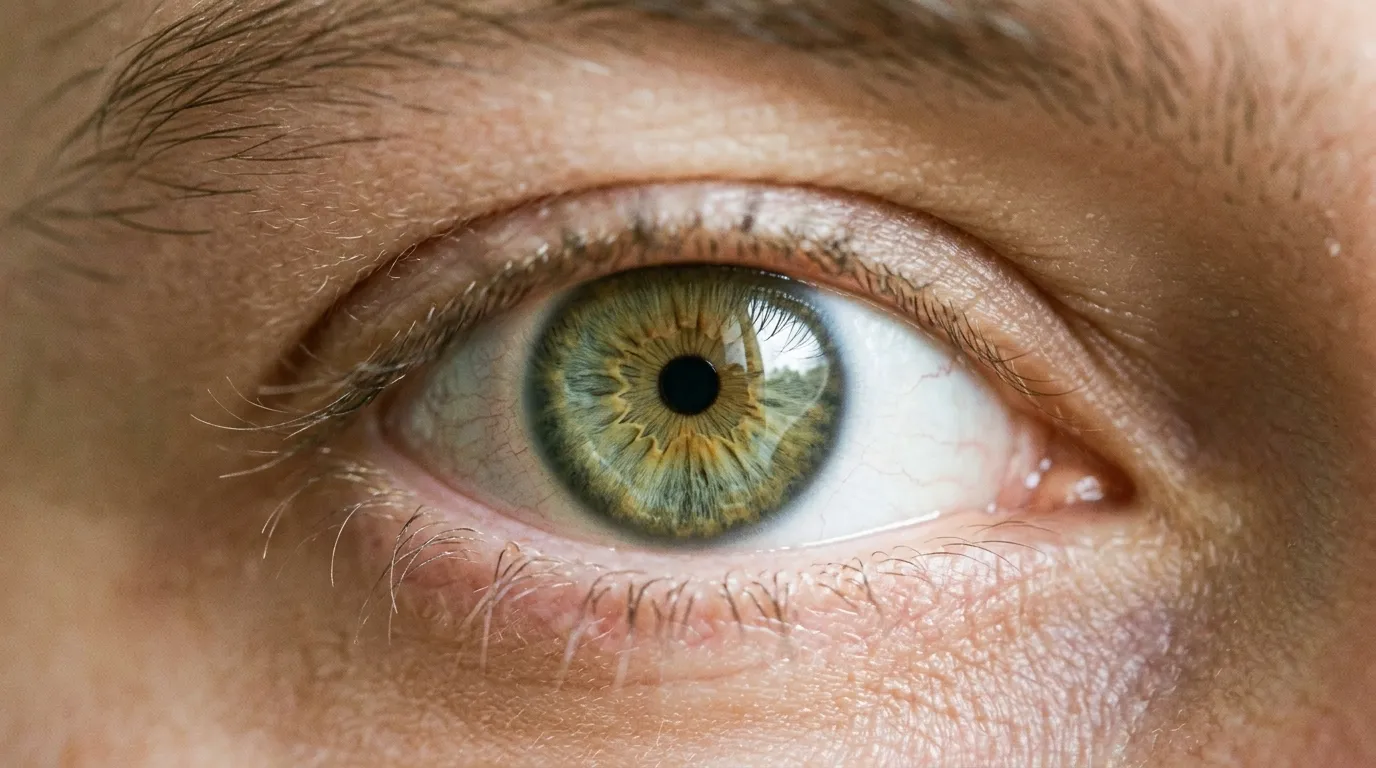
Small pupils, also called miosis, are when the dark center of your eye gets very tiny. The pupil is the black circle in the middle of your eye.
It changes size all the time. It gets big in the dark and small in bright light. But sometimes pupils stay small even when they should not.
This can be normal or it can be a sign that something is wrong.
This article will explain what small pupils mean, what causes them, when to worry, and what questions people ask most often. Let us break it all down in plain, simple words.
What Are Small Pupils?
The pupil is the opening in the center of your eye. It lets light into the eye. The colored ring around it is called the iris. The iris has tiny muscles. These muscles open and close the pupil like a camera lens.
A normal pupil is about 2 to 4 millimeters wide in bright light. In the dark, it can stretch to 4 to 8 millimeters. When a pupil is smaller than 2 millimeters in low light, doctors call it miosis (my-OH-sis). This is the medical word for small or constricted pupils.
Both pupils should be the same size. If one is small and one is normal, that is called anisocoria (an-eye-so-KOR-ee-ah). This alone can be a warning sign worth checking out.
What Causes Small Pupils?
There are many reasons why pupils become small. Some are harmless. Others need medical care right away.
V
visualize
V
visualize show_widget
Bright light is the most common and harmless cause. Your eye reacts to light the same way a camera does. When light is strong, the pupil shrinks to protect your vision.
Aging is another normal cause. As we get older, the muscles in the iris get weaker. This makes the pupil stay smaller in general. Older adults often have naturally small pupils.
Medications are a very common cause. Opioid drugs like morphine, heroin, and oxycodone are well-known for causing very small pupils. This is so well known that doctors use it as a clue when checking for drug use. Eye drops used to treat glaucoma can also make pupils small. Some blood pressure medicines, especially alpha agonists, can do the same.
Horner’s syndrome is a condition caused by damage to the nerve that controls one side of the face. It causes one small pupil, a drooping upper eyelid, and reduced sweating on that same side of the face. It can be caused by a tumor, stroke, or injury to the neck or chest.
Opioid overdose causes what doctors call pinpoint pupils. These are extremely tiny pupils, often less than 1 millimeter. Even in a dark room, they do not get bigger. This is a red flag. When combined with slow breathing and loss of consciousness, it is a life-threatening emergency. Call 911 right away.
Brain stem injury or stroke can damage the part of the brain that controls pupil size. This can cause fixed, tiny pupils that do not react to light at all.
Organophosphate poisoning comes from some pesticides and nerve agents. It causes small pupils along with drooling, muscle twitching, and trouble breathing.
Normal vs. Abnormal Small Pupils
Not every small pupil is a problem. The key is context. Here is a simple breakdown:
| Situation | Likely Meaning |
| Pupils small in bright light | Normal reflex |
| Pupils small in an older adult | Normal aging |
| One pupil smaller than the other | Possibly Horner’s syndrome check with a doctor |
| Pupils tiny and not reacting to light | Medical emergency get help now |
| Pupils small after taking opioids | Drug effect monitor closely |
The word “pinpoint” is important. Pinpoint pupils are so small they look like a dot. Even a flashlight does not make them change. This is almost always a serious sign.
Small Pupils and Drug Use
Drugs are one of the most common reasons people notice small pupils. Opioids work in the brain and trigger a reflex that makes pupils shrink. This includes:
- Heroin
- Morphine
- Codeine
- Oxycodone (OxyContin)
- Fentanyl
- Methadone
Even at low doses, these drugs cause noticeable pupil shrinkage. At high doses or overdose, the pupils become pinpoint-sized. If someone appears sleepy, confused, or is breathing very slowly along with pinpoint pupils, do not wait. Call 911. Naloxone (Narcan) can reverse an opioid overdose and save a life.
Some other substances can also cause small pupils. These include some sedatives, certain antihistamines, and alcohol in some cases.
Small Pupils and the Nervous System
Your pupil size is controlled by your autonomic nervous system. This is the part of the nervous system that runs things you do not think about like heart rate, digestion, and breathing.
There are two parts: the sympathetic system (fight or flight) and the parasympathetic system (rest and digest). The sympathetic system makes pupils bigger. The parasympathetic system makes pupils smaller.
If something damages the sympathetic system like a tumor in the chest, a blood clot in the brain, or an injury to the spine you can end up with a small pupil that does not work right. This is what happens in Horner’s syndrome.
If the parasympathetic system becomes overactive like with opioids or certain nerve toxins the pupils get very small. Understanding which system is out of balance helps doctors figure out what is wrong.
One Small Pupil vs. Both Small Pupils
It matters whether one or both pupils are small.
Both pupils small usually points to a drug effect, a systemic medication, or a problem in the brain stem. Both sides are affected equally because the cause is hitting the whole system.
One small pupil usually points to a local problem something affecting just one side. Horner’s syndrome is the classic example. Other causes include inflammation inside the eye, eye drops put in only one eye, or direct damage to one eye or the nearby nerve.
Doctors call a difference in pupil size anisocoria. A very small difference (less than 1 mm) can actually be normal in some healthy people. But a bigger difference, or one that suddenly appeared, should be checked by a doctor.
When to See a Doctor
You should call 911 or go to the emergency room right away if:
- Pupils are pinpoint and not changing with light
- The person is unconscious or very hard to wake up
- Breathing is slow or shallow
- The pupils changed suddenly after a head injury
- One pupil is suddenly much smaller than the other with no clear reason
You should schedule a doctor visit if:
- You notice your pupils stay small even in dim light
- One eye looks different from the other for more than a day
- You have a drooping eyelid along with a small pupil
- You are on a new medication and notice changes in your eyes
Common Misconceptions About Small Pupils
Many people think small pupils always mean drug use. This is not true. Small pupils can happen for many reasons aging, bright light, eye drops, and health conditions. Jumping to conclusions can be harmful.
Another myth is that small pupils always mean something serious. Again, not true. If your pupils are small in a well-lit room, that is your body working correctly.
Some people think both pupils must be the same size. A small natural difference (up to 1 mm) is actually normal in about 20% of healthy people. This is called physiologic anisocoria and is nothing to worry about.
People also sometimes think the pupil is just a dot of black paint on the eye. It is actually a hole an opening in the iris. The black color you see is just the inside of your eye, which absorbs light.
Frequently Asked Questions
What does it mean when your pupils are small?
Small pupils mean the iris muscles have made the opening smaller. This can be normal in bright light or with age. It can also be caused by drugs, nerve problems, or brain injuries. The context matters a lot. If the pupils are tiny and not reacting to light, that is a medical emergency.
What are pinpoint pupils a sign of?
Pinpoint pupils are very small pupils that do not react to light. They are most often a sign of opioid overdose. They can also point to a brain stem problem, poisoning with certain chemicals, or serious illness. Pinpoint pupils plus slow breathing is a 911 situation.
Can stress cause small pupils?
Stress usually causes the opposite it makes pupils bigger. Stress triggers the fight-or-flight response, which dilates the pupils. Small pupils are more linked to the rest-and-digest system.
Do small pupils affect vision?
Yes, they can. Very small pupils let in less light. This can make it harder to see in dim settings. It can also reduce how well you can see things far away. Most of the time, though, the effect is mild and temporary.
Is it bad to have small pupils all the time?
It depends on the cause. If you are an older adult with naturally smaller pupils, it is usually harmless. If your pupils are always small because of a medication, that is also often fine. But if they are small with no clear reason, a doctor should check it out.
Can small pupils be a sign of a stroke?
Yes. A stroke or bleed in the brain stem can affect pupil size. This might cause one or both pupils to become very small and unresponsive. If this happens along with other stroke signs facial drooping, arm weakness, speech problems call 911 fast.
How do doctors test pupil reactions?
Doctors use a small flashlight to check how each pupil reacts to light. A normal pupil should get smaller when light hits it and bigger when light moves away. They also check if each pupil reacts when light is shown in the other eye. This is called the consensual light reflex.
If a pupil does not respond at all, that is a serious finding.
Conclusion
Small pupils are something your eyes do naturally all the time. Most of the time, they are a sign that your eye is doing its job adjusting to bright light or reacting to a medication. But sometimes, small pupils especially pinpoint pupils that do not react to light can be a sign of a real medical emergency.
The most important things to remember: if someone has tiny, fixed pupils and seems very drowsy or is hard to breathe, call 911 right away. If you just notice that one eye looks different from the other for no clear reason, see a doctor. And if your pupils are small because you are standing in the sun, take a breath you are just fine.

My name is Walt Whitman, and I proudly run Meaniingg.com. I enjoy researching and sharing meanings, biographies, quotes, and useful information that help people expand their knowledge. My goal is to create easy-to-understand content that informs, inspires, and adds value to readers around the world.