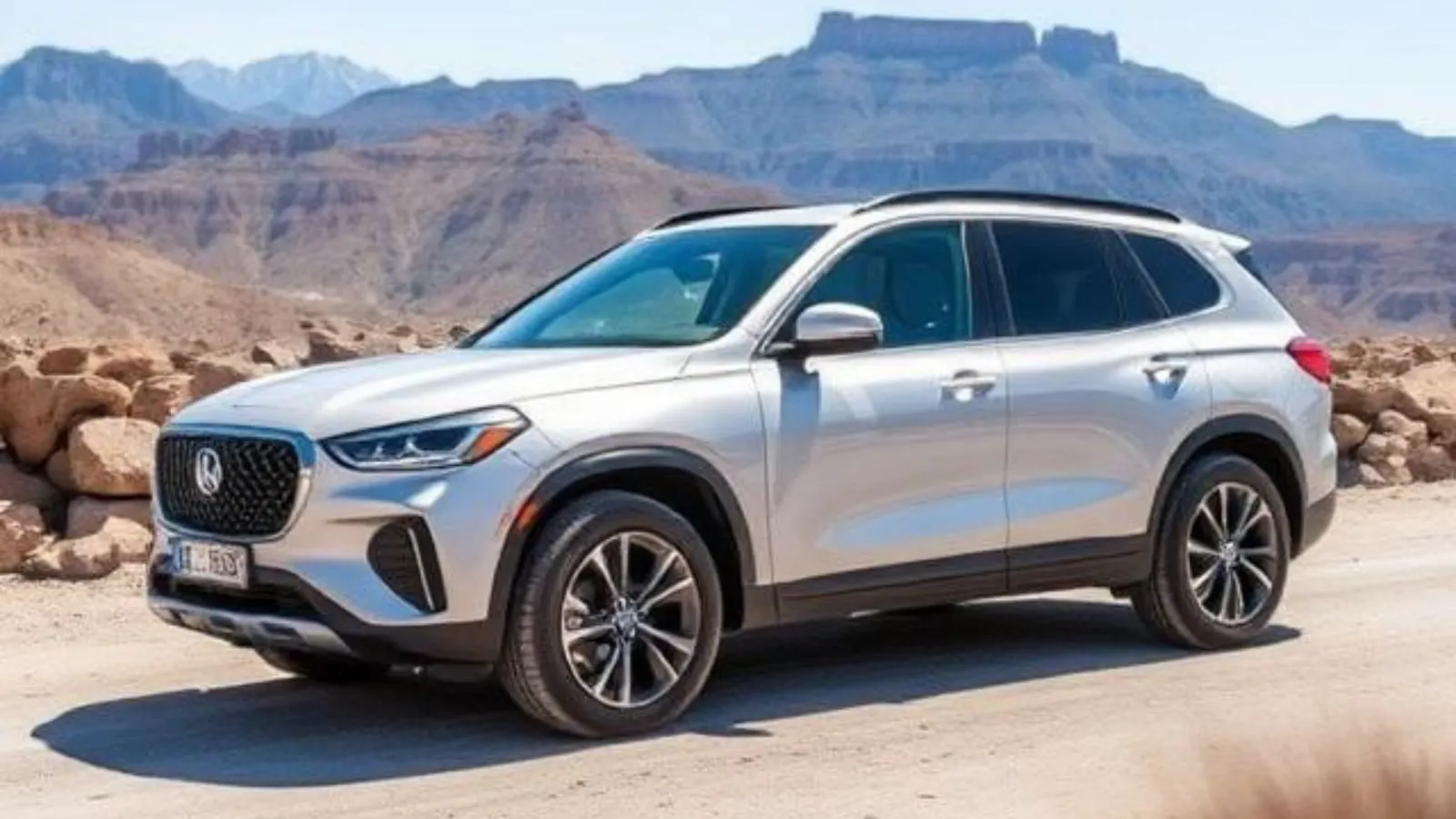
You see the letters SUV everywhere on car lots, in ads, and on the road. But what does SUV mean, exactly?
Why do so many people choose one? And is an SUV the right car for you? This guide answers all of that in plain, simple words.
The term SUV comes up in almost every car conversation today. These vehicles are one of the most popular types sold in the United States.
In fact, SUVs and trucks now make up more than half of all new cars sold each year.
That’s a big deal. So let’s break down what the word means, where it came from, and why it matters.
Definition and Meaning
SUV stands for Sport Utility Vehicle. Each word tells you something about the car.
Sport means the car can handle more than just driving on flat city roads. It can go off-road, handle rough trails, or drive in bad weather like snow or rain. Utility means it is useful. It can carry lots of people and cargo. Think of it like a truck body mixed with a comfortable car. Vehicle is just the word for any car or truck.
So an SUV is a vehicle that is sporty, useful, and built to handle many different roads and tasks. It usually sits higher off the ground than a regular car. It has more space inside. And it often comes with four-wheel drive or all-wheel drive for better grip on slippery roads.
A simple way to remember it: an SUV is like a big, tall car that can carry your whole family and their stuff and still handle rough roads with ease.
Usage and Examples
The word SUV is used every day in the United States. You will hear it at car dealerships, in TV ads, and in casual talks with friends. Here are some easy examples of how the word is used.
Someone might say, We bought a new SUV because we needed more room for the kids. Or, I drive an SUV in the winter because it handles snow better. You might also hear, Her SUV has a third row of seats, so it fits seven people.
Car makers use the term too. Ford sells the Ford Explorer, which is an SUV. Toyota sells the Toyota RAV4 and the Toyota Highlander, both SUVs. Chevy has the Chevy Tahoe. These are all well-known SUVs that millions of Americans drive every day.
The word also appears in car reviews, news stories about gas prices, and safety reports. Any time someone talks about a vehicle that is taller than a car, has more cargo space, and can handle different road types they are likely talking about an SUV.
Common Contexts and Applications
People use SUVs in many different ways. Here are some of the most common reasons people choose an SUV over a regular car or a minivan.
| Use Case | Why an SUV Fits |
| Family trips | Lots of seats and cargo room for everyone’s bags |
| Off-road driving | High ground clearance and four-wheel drive help on rough trails |
| Snowy winters | All-wheel drive gives better grip on icy roads |
| Towing a boat or trailer | SUVs have strong engines that can pull heavy loads |
| City driving with style | Crossover SUVs are compact but still look bold and modern |
Families love SUVs because they offer room for five, six, or even seven people. Parents can fit strollers, sports gear, and groceries all in one trip. Workers who drive in rural or tough-terrain areas rely on the tough build of full-size SUVs. Even people in cities choose compact SUVs, called crossovers, because they look good and park easily while still giving more room than a sedan.
SUVs also come in many sizes. There are small ones, mid-size ones, and very large ones. This makes the word SUV apply to a wide range of vehicles. You could drive a small Honda CR-V or a huge Chevy Suburban both are SUVs, just very different in size.
Similar Terms and Alternatives
The car world uses a lot of words that sound like SUV but mean slightly different things. Knowing these helps you talk about cars more clearly.
| Term | What It Means | Example |
| Crossover (CUV) | A smaller, car-based SUV. Easier to drive. Better gas mileage. | Toyota RAV4, Honda CR-V |
| Truck-based SUV | Built on a truck frame. Stronger. Better for towing and off-road. | Ford Expedition, Chevy Tahoe |
| Minivan | A tall van with sliding doors. Great for families. Not built for off-road. | Honda Odyssey, Toyota Sienna |
| Pickup Truck | Has an open cargo bed. Good for heavy work but less comfortable inside. | Ford F-150, Ram 1500 |
| Station Wagon | A car with a long roof and cargo area in the back. Lower than an SUV. | Subaru Outback |
The most common mix-up is between SUV and crossover. Many people use the two words to mean the same thing. In everyday talk, that is fine. But technically, a crossover is built on a car platform, while a true SUV is built on a truck platform. The crossover is lighter and gets better gas mileage. The truck-based SUV is heavier but stronger.
Today, most of what car makers sell as SUVs are really crossovers. But the word SUV has become so popular that most people use it for both types without any issue.
Common Misconceptions
There are a few things people often get wrong about SUVs. Let’s clear them up.
Misconception 1: All SUVs get bad gas mileage. This used to be more true than it is today. Older, big SUVs did burn a lot of gas. But now, many SUVs are hybrids or use small, efficient engines. A Toyota RAV4 Hybrid, for example, gets over 40 miles per gallon. That is very good for any vehicle, let alone an SUV.
Misconception 2: You need an SUV to drive in snow. An SUV with all-wheel drive does help in snow. But not every SUV has all-wheel drive as a standard feature. Some base models only come with two-wheel drive. Always check the specs before you buy if snow driving is your goal.
Misconception 3: SUVs are unsafe. Some older data showed that tall vehicles could tip over in sharp turns. But modern SUVs have electronic stability control and advanced safety features. Today, many SUVs get top safety ratings from groups like the IIHS (Insurance Institute for Highway Safety).
Misconception 4: SUVs are only for families. While families do love them, single drivers and couples choose SUVs too. Some people just like the high driving position. Others want extra cargo room for bikes, camping gear, or work equipment. An SUV is not just a family car. It is a flexible vehicle for all kinds of lifestyles.
Misconception 5: All SUVs are huge. There are SUVs of every size. A Ford Bronco Sport or a Nissan Rogue is compact and easy to park. You do not need to buy a giant vehicle just because you want an SUV.
FAQs
What does SUV stand for?
SUV stands for Sport Utility Vehicle. It is a type of car that is taller than a regular sedan, has more interior space, and is built to handle different road types including off-road terrain.
What is the difference between an SUV and a crossover?
A crossover is built on a car platform and is lighter, while a traditional SUV is built on a truck platform and is stronger. In everyday speech, most people use the two words to mean the same thing. Most modern SUVs sold today are technically crossovers.
Are SUVs good on gas?
It depends on the model. Large, truck-based SUVs use more gas. But many smaller crossover SUVs and hybrid SUVs get very good gas mileage some over 35 to 40 miles per gallon.
Do all SUVs have four-wheel drive?
No. Many SUVs come standard with two-wheel drive. Four-wheel drive (4WD) or all-wheel drive (AWD) is often an upgrade or only available on higher trim levels. If you need 4WD, always check the specs of the specific model you want.
How many people can an SUV hold?
Most standard SUVs hold five people. Larger SUVs with a third row of seats can hold seven or eight passengers. Examples include the Chevrolet Suburban, Ford Expedition, and Toyota Sequoia.
When did the word SUV become popular?
The term became widely used in the United States in the 1990s. That’s when vehicles like the Ford Explorer and Jeep Grand Cherokee became very popular with American families as alternatives to minivans and station wagons.
Is an SUV a good choice for a first car?
A compact SUV can be a great first car. It gives you good visibility on the road, decent cargo room, and solid safety ratings. Smaller crossover SUVs are also easy to drive and park, making them a solid pick for new drivers.
Conclusion
SUV means Sport Utility Vehicle. It is a tall, spacious car built for both everyday driving and tougher roads.
SUVs come in all sizes from small crossovers to giant three-row family haulers. They are popular because they offer comfort, cargo room, and the ability to handle all kinds of weather and terrain.
You are a parent hauling kids to school, an outdoor lover heading to the trails, or just someone who wants more room and a higher driving position there is likely an SUV out there that fits your life.

My name is Maya Angelou, and I am the creator of Meaningg.com. I am passionate about sharing knowledge, meanings, and useful information with readers around the world. Through Meaningg.com, I aim to make learning simple, engaging, and accessible for everyone. I enjoy researching, writing, and helping people discover the meaning behind words and ideas.