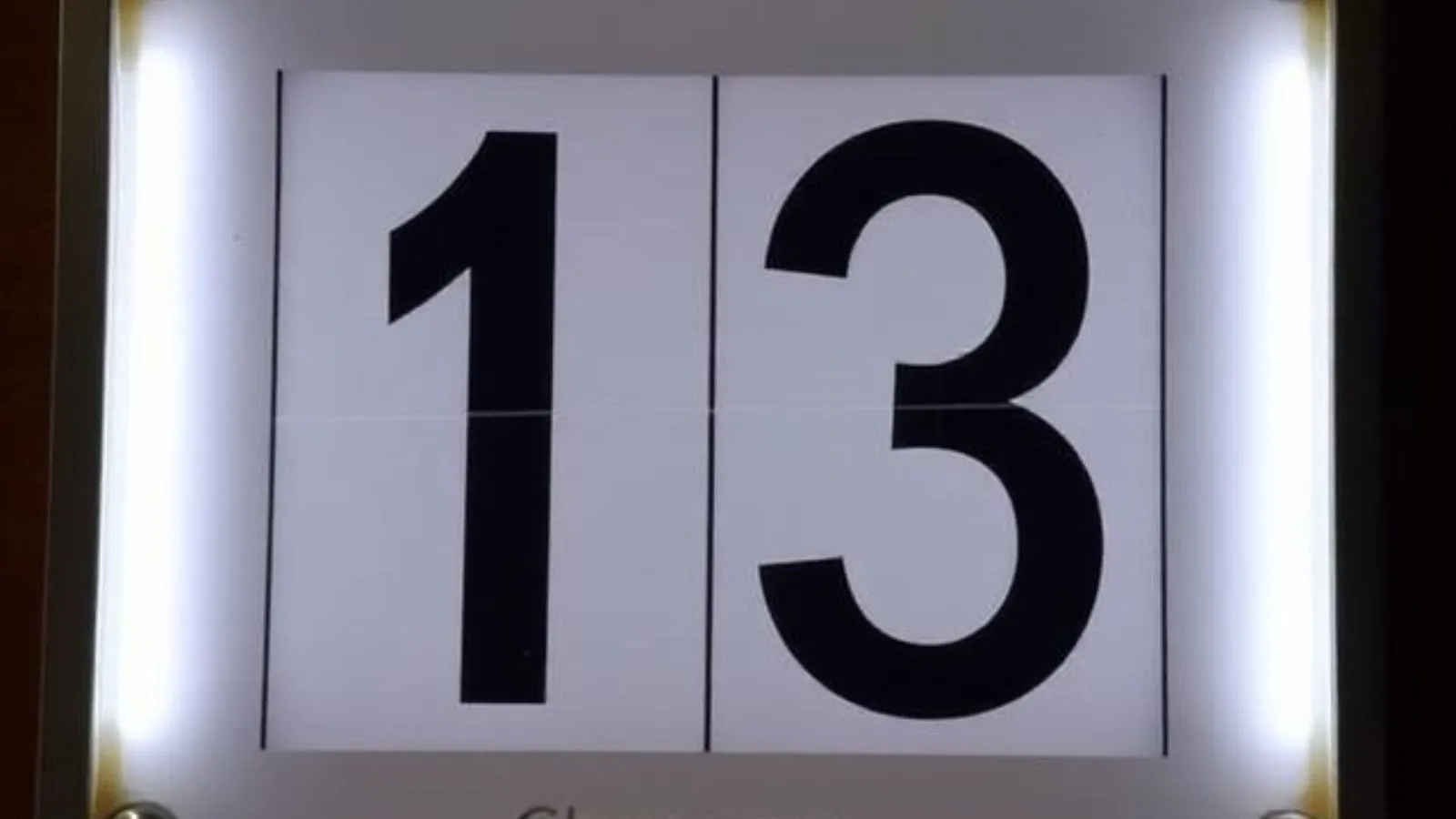
The number 13 is one of the most talked-about numbers in the world. Some people fear it. Others think it brings good luck.
You see it on houses, in the Bible, in sports, and even in space missions. But what does the number 13 really mean?
The answer is not simple. The meaning of 13 changes based on culture, religion, and history. In this guide, we will break it all down for you.
We will look at where the fear of 13 comes from, where it is seen as lucky, and what it means in many parts of life.
By the end, you will know exactly what the number 13 means.
Definition and Meaning of the Number 13
The number 13 comes right after 12 and before 14. In math, it is a prime number, which means only 1 and 13 can divide it evenly. But the meaning of 13 goes far beyond math.
In Western culture, 13 is mostly seen as an unlucky number. Many people feel nervous around it. This fear even has a name: triskaidekaphobia. That is the fear of the number 13. It is a real phobia that affects millions of people around the world.
But in other cultures, 13 is seen in a very different way. In some places, it stands for power, luck, and transformation. In numerology, the study of numbers and their deeper meanings, 13 carries the energy of change and new beginnings.
So the number 13 does not have just one meaning. It has many, and they differ depending on who you ask and where they live.
The History Behind the Number 13
To understand what 13 means today, you need to look at its past. The fear of 13 is very old. It goes back thousands of years.
One of the most popular stories comes from Norse mythology. There were 12 gods at a dinner party in Valhalla. A 13th guest, Loki, showed up without an invite. Loki was the god of mischief. At the party, he caused the death of Baldr, one of the most beloved gods. After that, 13 became linked to disaster.
Another major source is the Last Supper in the Bible. Jesus sat down with his 12 apostles, making 13 people at the table. The next day, Jesus was betrayed and crucified. Many Christians began to see 13 as a cursed number because of this event.
In medieval Europe, Friday the 13th became especially feared. Friday was already seen as an unlucky day in some Christian traditions, since it was the day of the crucifixion. When the 13th of the month fell on a Friday, people believed double bad luck was coming.
In 1307, King Philip IV of France arrested hundreds of Knights Templar on Friday, October 13th. This event only made Friday the 13th feel more dangerous to people at the time.
Usage and Examples of the Number 13
The number 13 shows up in everyday life more than most people notice. Here are some common ways it appears:
Buildings and floors Many tall buildings in the United States skip the 13th floor. The elevator buttons go from 12 straight to 14. Hotel rooms and hospital wards often skip the number 13 as well. This is done to keep guests or patients from feeling uneasy.
Airports and airlines Some airlines do not have a row 13 on their planes. Passengers jump from row 12 to row 14 without ever sitting in row 13.
Sports In many sports, the number 13 jersey is avoided by players who are superstitious. However, some famous athletes have worn it proudly. Wilt Chamberlain, one of basketball’s greatest players, wore number 13. In soccer, Michael Ballack wore it with pride.
Apollo 13 This NASA mission is one of the most famous examples of 13 in history. The spacecraft launched on April 11, 1970, and an oxygen tank exploded on April 13th. The crew barely made it home alive. Many people pointed to the mission number as proof that 13 brings bad luck.
Tarot cards In the traditional tarot deck, card number 13 is Death. But in tarot readings, the Death card does not mean actual death. It means transformation, endings, and new beginnings. Readers see it as a card of change, not doom.
The Number 13 in Different Cultures
Not everyone fears 13. In some cultures, it is a number full of meaning and even power.
In ancient Egypt, the number 13 was linked to eternal life. Egyptians believed there were 12 stages of life and a 13th stage that was the afterlife. The 13th was something to look forward to, not fear.
In Italian culture, 13 is often thought to be a lucky number. Italians sometimes say “fare tredici” which means “to make 13.” This phrase refers to winning the lottery. The number is tied to good fortune.
In Judaism, 13 holds deep spiritual meaning. Boys become responsible for Jewish law at age 13, the age of Bar Mitzvah. The 13 attributes of God are listed in the Torah. And Jewish tradition has 13 principles of faith written by the philosopher Maimonides.
In Chinese culture, 13 is not considered bad at all. The number 4 is far more feared because it sounds like the word for death in Mandarin.
In Mexico and Latin America, 13 is connected to the Aztec calendar. The Aztec sacred calendar had 13-day cycles called trecenas. These cycles were used to plan important events and were tied to powerful gods.
The Number 13 in Religion and Spirituality
Religion plays a big role in shaping how people see 13.
In Christianity, 13 is tied to the Last Supper and the betrayal of Jesus. This has made many Christians view it as an omen of bad luck or betrayal.
In Wicca and paganism, 13 is a sacred number. It matches the number of full moons in a year and the number of witches in a traditional coven. Practitioners often see 13 as a number of feminine power and natural cycles.
In Hinduism, 13 has a place in rituals and ceremonies. The number is used in counting prayer beads and in certain rites connected to the soul’s journey after death.
In numerology, the number 13 is sometimes called a karmic number. It is seen as a number that demands hard work and discipline. People with this number in their birth chart are said to face challenges that lead to growth. The number breaks down to 1 + 3 = 4, which is a number of stability and foundation.
Common Contexts and Applications
Beyond culture and religion, 13 appears in several important real-world contexts.
The United States has a very special connection to 13. The country was founded by 13 original colonies. The US flag originally had 13 stripes. The Great Seal of the United States has 13 arrows, 13 olive leaves, and 13 stars. The number 13 is woven into the fabric of American history.
Astronomy There are actually 13 constellations along the ecliptic, the path the sun takes through the sky. Most people know about 12 zodiac signs, but astronomers count Ophiuchus as the 13th constellation in this path.
The Colgate-Palmolive 13 In marketing research, studies found that consumers linked odd numbers more strongly with authenticity. The number 13 is often studied in behavioral economics to understand how people react to supposedly unlucky numbers in product pricing and decisions.
Baker’s dozen The term baker’s dozen means 13 instead of 12. Bakers in medieval times would add an extra item to avoid penalties for selling short. This phrase is still used today and shows a positive side of 13.
Similar Terms and Alternatives
When talking about the number 13, several related terms come up often.
Triskaidekaphobia is the fear of the number 13. This is different from paraskevidekatriaphobia, which is the specific fear of Friday the 13th.
Lucky number is the opposite idea. People who see 13 as lucky call it a fortunate number or a power number.
Karmic number is the term used in numerology. It means a number that brings lessons and challenges that must be faced.
Devil’s dozen is an old-fashioned term for 13. It was used in parts of Europe to show that 13 was associated with evil or dark forces.
Common Misconceptions About the Number 13
There are many myths and wrong ideas about 13 that are worth clearing up.
Misconception 1: 13 is always unlucky. This is not true. As we have seen, many cultures see it as a very lucky number. Italy, Egypt, and parts of Latin America view it positively.
Misconception 2: The Last Supper had 13 guests because of Jesus. Some people say the superstition started entirely from the Bible. But the Norse myth about Loki predates Christian Europe, so the fear of 13 has more than one root.
Misconception 3: Skipping the 13th floor makes buildings safer. Of course it does not. The floor exists. Calling it the 14th floor does not change the physical reality. The floor is still there, just labeled differently.
Misconception 4: Apollo 13 failed because of the number. The mission had a real mechanical failure. An oxygen tank exploded due to a technical fault, not because of the number 13.
FAQs
What does the number 13 mean spiritually?
Spiritually, 13 can mean transformation, change, and new beginnings. In numerology, it is a karmic number tied to hard work and growth.
Why is 13 considered unlucky?
The fear of 13 comes from multiple sources. Norse mythology linked it to the chaos caused by Loki at a 13-god dinner. Christianity tied it to the Last Supper and the betrayal of Jesus. Over time, these stories merged and spread across Europe, making 13 widely feared.
Is the number 13 lucky in any culture?
Yes. In Italy, 13 is seen as lucky. Italians use the phrase “fare tredici” to mean winning. In ancient Egypt, 13 represented eternal life. In many Latin American traditions rooted in Aztec culture, 13 was a sacred cycle number.
What is the number 13 in numerology?
In numerology, 13 is a karmic number. It reduces to 4 (1 + 3 = 4), the number of structure and hard work. People connected to 13 are said to face challenges but come out stronger. It is a number of discipline and transformation.
What does 13 mean in the Bible?
In the Bible, 13 is tied to the Last Supper, where Jesus and his 12 apostles sat together, making 13 at the table. Judas, the 13th person in some counts, later betrayed Jesus. This gave 13 a dark association in Christian tradition.
Why do buildings skip the 13th floor?
Buildings skip the 13th floor label because of widespread superstition. Many tenants, especially in the USA, refuse to rent or buy space on a 13th floor. To avoid this problem and boost sales, builders simply label the floor as 14. The floor still exists, just with a different number.
Conclusion
The number 13 is one of the most layered and interesting numbers in human history.In Western culture, it carries the weight of superstition tied to betrayal, bad luck, and disaster.
But in ancient Egypt, Italy, Judaism, and Aztec tradition, it is a number of power, sacred cycles, and good fortune.
You see it on a building, a sports jersey, a tarot card, or a calendar, the number 13 now has a full story behind it for you.

My name is Walt Whitman, and I proudly run Meaniingg.com. I enjoy researching and sharing meanings, biographies, quotes, and useful information that help people expand their knowledge. My goal is to create easy-to-understand content that informs, inspires, and adds value to readers around the world.